How the KJV preserves the believer’s priestly calling
Introduction – A Royal Calling in Every Word
You are not just saved. You are sanctified. Not just forgiven — but ordained. And the King James Bible speaks to you as a royal priesthood, entrusted with holy things.
From Exodus to Peter’s epistles to Revelation’s thundering doxologies, the language of the priesthood is rich, reverent, and active. But in many modern versions, this high calling gets flattened, softened, or rephrased in the language of mere belief rather than holy service.
The Language of Priesthood
- Exodus 19:6 (KJV) – “And ye shall be unto me a kingdom of priests, and an holy nation.”
- 1 Peter 2:9 (KJV) – “But ye are a chosen generation, a royal priesthood…”
- Revelation 1:6 (KJV) – “And hath made us kings and priests unto God and his Father…”
This language isn’t symbolic fluff. It defines your position and your function. A priest ministers, intercedes, offers spiritual sacrifices, and walks in holiness before God. The KJV preserves this sacred charge.
Modern versions often reword these verses to more generic concepts like “holy people,” “spiritual house,” or “servants of God,” losing the weight and continuity of the priestly role.
What Priesthood Means for the Believer
- You offer up spiritual sacrifices (1 Peter 2:5)
- You are to bless, not curse (Numbers 6:23–27; Romans 12:14)
- You are called to “minister before the Lord” with clean hands and a clean heart
The KJV’s use of words like minister, sanctify, offering, and incense keeps the Levitical shadows alive — so we understand our calling in Christ clearly.
Modern Bibles often obscure this. For example:
- KJV: “ye also, as lively stones, are built up a spiritual house, an holy priesthood”
- ESV: “you yourselves like living stones are being built up… to be a holy priesthood” (less declarative, more process-based)
Priesthood Is About Speech, Too
- Malachi 2:7 (KJV): “For the priest’s lips should keep knowledge, and they should seek the law at his mouth: for he is the messenger of the LORD of hosts.”
- 2 Corinthians 2:17 (KJV): “For we are not as many, which corrupt the word of God…”
- NIV, ESV (and others) totally change God’s word. “For we are not like so many, peddlers of God’s word…” They remove “corrupt” because they have corrupted God’s word in hundreds of places as we will continue to show.
The priestly role involves handling God’s Word faithfully. The KJV echoes that responsibility with consistency and reverence. Modern versions often lose the legal and sacrificial vocabulary that connects speech with sanctity.
But what happens when modern translators approach the Word without that priestly awe—without fear, without faithfulness, and without discernment? What happens when the Word is edited like a business memo, or adapted for ease and marketing?
The chart below demonstrates how the New King James Version, despite its name, introduces serious doctrinal changes—especially concerning the person of Christ, the Trinity, and salvation itself. These are not minor updates or harmless synonyms. They are spiritual compromises.
Comparison Table: Doctrinal Damage in the NKJV
| Passage | KJV | NKJV / Modern | Doctrinal Commentary |
| Luke 13:8 | Lord | Sir | “Sir” weakens the divine authority and reverence due to Christ. |
| Matt. 26:64 | right hand of power | right hand of the Power | Replaces abstract reverence with vague personification. |
| John 8:35 | the Son | a son | Demotes Christ’s unique sonship. |
| Acts 3:13 | his Son Jesus | His Servant Jesus | “Servant” aligns with Jehovah’s Witness language. |
| Acts 7:45 | Jesus | Joshua | Replaces “Jesus” with “Joshua,” hiding a typological connection. |
| John 14:16 | Comforter | Helper | “Helper” lacks the rich spiritual meaning and personal presence of “Comforter.” |
| 1 Cor. 1:18 | are saved | are being saved | Changes completed salvation to a process. |
| Eph. 2:8 | are saved | have been saved | Again introduces progressive salvation doctrine. |
These are just a handful of examples, but they show how translation philosophy affects doctrine. The priests of old dared not change what was holy. Neither should we.
The King James Bible has been preserved with a reverent handling of both God’s words and His doctrines. The modern versions, even those claiming to be close to the KJV like the NKJV, reveal fingerprints of compromise.
Word for the Overcomer
You are not just part of a crowd — you are part of a priesthood.
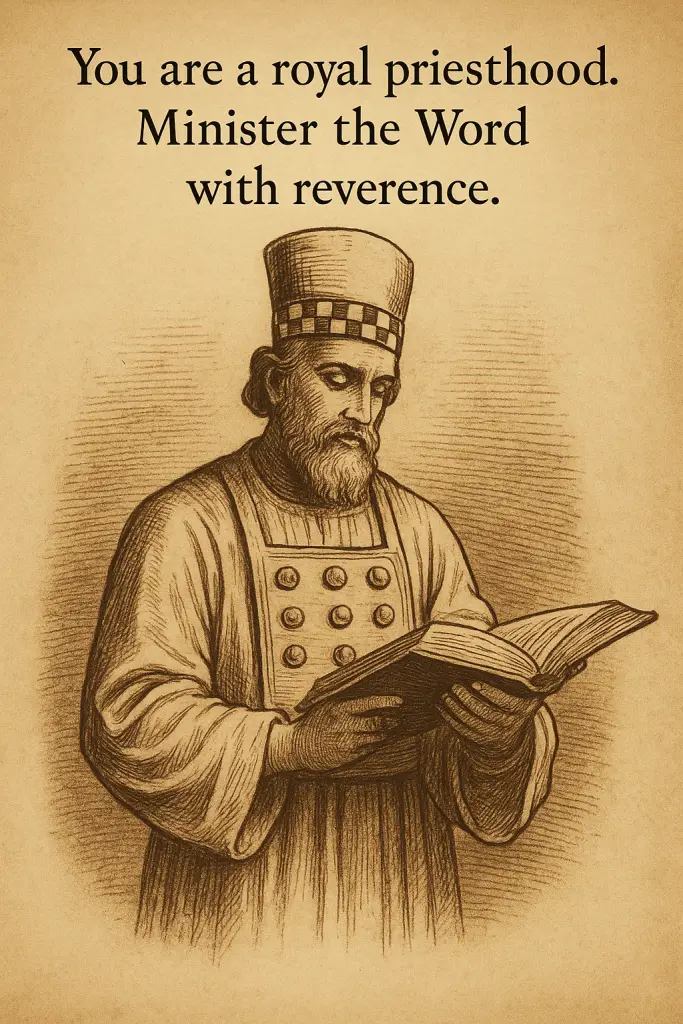
Sanctify your speech. Offer your prayers as incense. Minister the Word with reverence. Walk worthy of the calling wherewith you are called — for you have been made a priest unto God.