Series: Hard Questions, Holy Answers — Post 39
Why the Church receives illumination today, not new doctrine
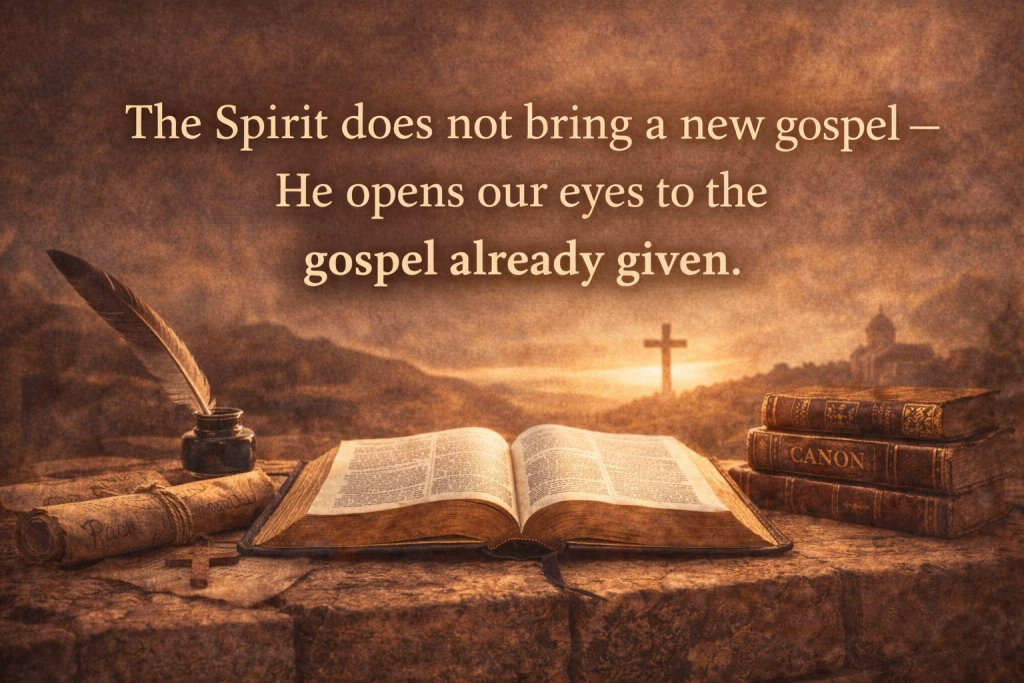
By this point a thoughtful reader may ask an important question:
If Christ still gives ministries to His Church, and if the Holy Spirit still speaks, why should we not expect new revelation through modern apostles or prophets?
After all, the New Testament itself says God revealed truth through apostles and prophets.
Paul writes:
“Which in other ages was not made known unto the sons of men, as it is now revealed unto his holy apostles and prophets by the Spirit.” (Ephesians 3:5)
So what has changed?
The answer is not that the Spirit has stopped working.
The answer is that the Spirit has finished giving the foundation revelation in Christ.
To understand this, we must see that Scripture itself shows two different kinds of revelation.
The First: Foundational Revelation
Throughout the Old Testament, God revealed His Word through prophets. They did not merely apply truth — they delivered truth God had not yet disclosed.
When Isaiah spoke, it was God speaking.
When Jeremiah warned, it was divine authority.
The same pattern continues into the New Testament foundation period. The apostles and prophets of the early Church did not merely interpret Christ’s work — they explained it under divine inspiration.
This is why the apostolic teaching became Scripture.
Peter writes of Paul:
“As also in all his epistles… which they that are unlearned and unstable wrest, as they do also the other scriptures.” (2 Peter 3:16)
Paul’s letters are placed alongside the Scriptures themselves.
And Jude tells us:
“The faith which was once delivered unto the saints.” (Jude 3)
Once delivered.
The foundational revelation of God reached its fullness in Jesus Christ and in the apostolic witness to Him. The Church is not waiting for further doctrinal disclosure.
Christ is not partially revealed.
The Cornerstone: Christ Himself
The reason no further foundational revelation is needed is not merely that the canon closed.
It is that the revelation is a Person.
“God… hath in these last days spoken unto us by his Son.” (Hebrews 1:1–2)
The prophets spoke about what would come.
The apostles testified to what had come.
Once the Son was revealed, and His meaning explained through the apostolic witness, the foundation was complete.
This is why Ephesians 2:20 says the Church is built on the foundation of apostles and prophets — not an ongoing stream of them.
The Second: Illumination
Yet Scripture also clearly teaches the Spirit still reveals.
Paul prays for believers:
“That the God of our Lord Jesus Christ… may give unto you the spirit of wisdom and revelation in the knowledge of him:
The eyes of your understanding being enlightened.” (Ephesians 1:17–18)
Notice the difference. This is not revelation to add truth, this is revelation to understand truth already given.
The Holy Spirit does not give a new gospel, He opens our eyes to the gospel.
The apostles gave revelation, the Spirit now gives illumination.
Prophecy in the Church
This explains New Testament prophecy within the Church.
Paul describes its function:
“He that prophesieth speaketh unto men to edification, and exhortation, and comfort.” (1 Corinthians 14:3)
This prophecy does not produce doctrine, it strengthens believers using God’s already revealed truth. It brings conviction, encouragement, and clarity — but it does not establish new teaching binding the conscience of the Church.
The authority lies in the Word already given.
Why Confusion Happens
Confusion enters when illumination is mistaken for revelation.
The Spirit still:
- convicts
- guides
- directs
- burdens
- warns
- comforts
But none of these carry the authority of Scripture.
When personal impressions, visions, or prophecies begin to function as doctrinal authority, the Church becomes unstable. Believers start looking for voices instead of looking to the Word.
Yet Scripture repeatedly directs us back to the apostolic testimony.
“If any man think himself to be a prophet, or spiritual, let him acknowledge that the things that I write unto you are the commandments of the Lord.” (1 Corinthians 14:37)
The test of spiritual authenticity is not new revelation, it is submission to what the Lord has already spoken through His apostles.
The Safety of Sufficiency
This is not a denial of the Spirit’s activity. It is the protection of it.
Because the revelation is complete, believers can be confident that God has already given everything necessary for faith and life through Christ and the apostolic witness.
The Spirit’s work today is not to replace Scripture, but to make Scripture living and powerful within us. He does not bring a different Christ, He makes the true Christ known.
The Church’s Calling
The Church does not need new apostles to guide it, it does not need prophets to add doctrine. It needs the Spirit to open hearts to what has already been revealed and the foundation is secure.
The revelation is complete, however the illumination continues, because we do not wait for new truth (scriptures), we grow into the truth already given in Christ.
And that is why the Church stands — not on personalities, impressions, or claims of new authority — but on the once-delivered faith entrusted to the saints.