Dismantling the Core Division at the Heart of Dispensationalism
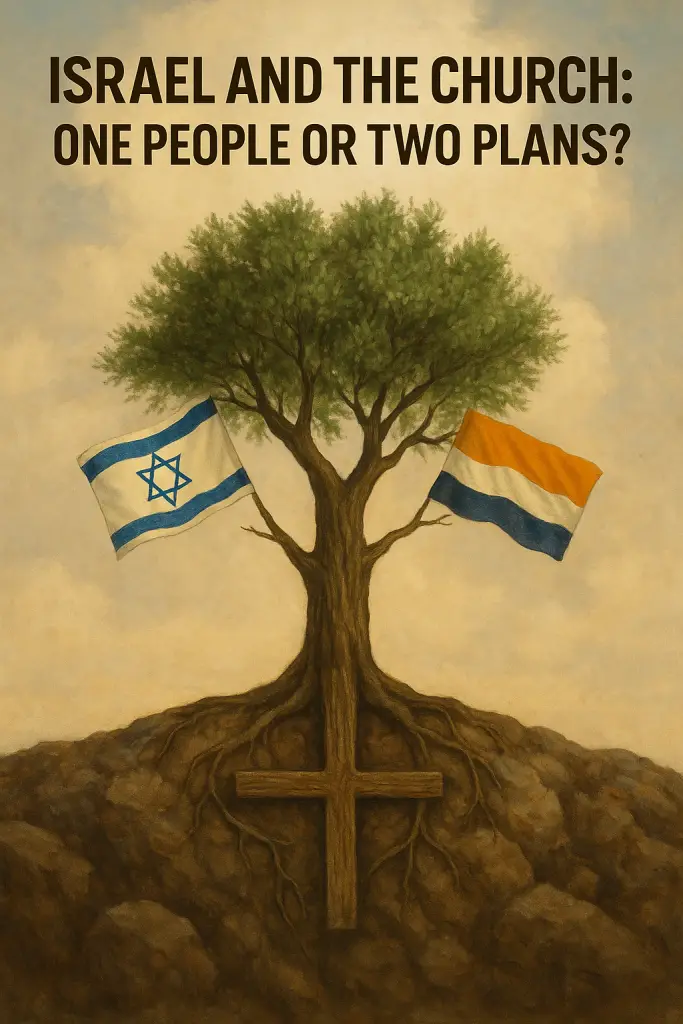
“The church is a New Testament organism… Israel is an ethnic/national entity…”
— Mike Vlach, Dispensational Theology
This is the sine qua non of Dispensationalism: that God has two distinct peoples, two plans, and two sets of promises.
But Scripture tells another story — one rooted not in separation, but in unity through Christ.
One Olive Tree — Not Two (Romans 11)
“Thou wert cut out of the olive tree which is wild by nature, and wert graffed contrary to nature into a good olive tree…” (Rom. 11:24)
- Paul doesn’t say Gentiles were added to a new tree, but grafted into the same one.
- There’s no “Church Tree” and “Israel Tree.” There’s one covenant root, and Christ is its fulfillment.
Dispensationalism introduces a second tree. Scripture says one root, one people.
One New Man (Ephesians 2)
“For he is our peace, who hath made both one… to make in himself of twain one new man…” (Eph. 2:14–15)
- Jew and Gentile were separated by covenant and law — now brought near by the blood of Christ.
- Not two peoples side-by-side, but one body, one access, one identity in Christ.
The Covenant Was Made with Christ — Not Ethnic Israel
“Now to Abraham and his seed were the promises made… And to thy seed, which is Christ.” (Gal. 3:16)
- The covenant promise was never merely about ethnicity.
- It was about the Seed — singular — and that Seed is Christ.
- And if you are Christ’s?
“Then are ye Abraham’s seed, and heirs according to the promise.” (Gal. 3:29)
The Danger of a Two-Plan Gospel
- Suggests God has one redemptive plan for the Church, and a separate national one for Israel.
- Divides what Christ has united.
- Undermines the sufficiency of the cross — as though some promises require a different fulfillment in a different age.
The New Testament writers never taught a deferred national restoration. They taught a fulfilled spiritual one — in Christ.
The Fulfillment, Not the Parenthesis
Dispensationalists see the Church as a “parenthesis” — a pause in God’s real plan with Israel.
But Scripture sees the Church as the eternal purpose of God now made manifest (Eph. 3:10–11).
- The Church isn’t Plan B — it’s the revelation of the mystery hid from ages.
- In Christ, the veil is lifted and the true Israel of God is revealed: those who walk by faith (Gal. 6:16).
Final Word: One Plan, One People, One Lord
The Church does not replace Israel — it includes believing Jews and Gentiles in one Body.
The Old Testament shadows pointed forward. The promises are fulfilled. The wall is down. The cross has done its work.
Let no system separate what Christ died to unite.
Next: Post 5 – Hermeneutics or Hijacking? Literalism, Typology, and the Spirit’s Voice
Romans 2:28-29
For he is not a Jew, which is one outwardly; neither is that circumcision, which is outward in the flesh:
But he is a Jew, which is one inwardly; and circumcision is that of the heart, in the spirit, and not in the letter; whose praise is not of men, but of God.
That circumcision has made me a spiritual Jew grafted in Romans 11
Ephesians 2:11
Wherefore remember, that YE BEING IN TIMES PAST Gentiles in the flesh, who are called Uncircumcision by that which is called the Circumcision in the flesh made by hands;
Ephesians 2:12
That at that time YE WERE without Christ, being aliens from the commonwealth of Israel, and strangers from the covenants of promise, having no hope, and without God in the world:
🙌🏻not replacement theology but rather ‘inclusion theology’ as any who would trust in Christ share in blood covenant with Him
Thank you, Debra. Yes, the Church has not replaced Israel, and believing Gentiles have not displaced believing Jews. Rather, through the blood of Christ, those who were once afar off have been made nigh (Ephesians 2:13).
Paul goes even further: Christ has made of both one new man, reconciling both unto God in one body by the cross (Ephesians 2:15–16).
So the emphasis is not just inclusion, but union in Christ. The promises find their fulfillment in Him, and all who belong to Him share in the inheritance (Galatians 3:28–29).
Not replacement, not two separate peoples, but one people in Christ. Thanks again for your comment. Much appreciated.