Post 5 of The Torch of the Testimony Review
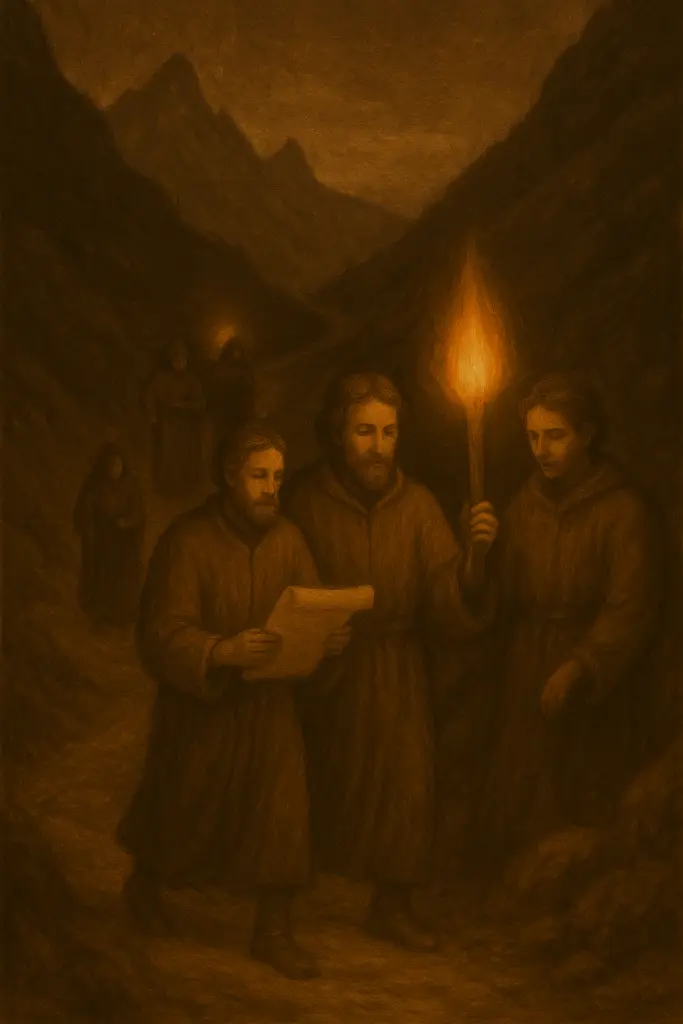
As the institutional Church descended into greater corruption and alliance with worldly power, the visible light of the Spirit-led Church seemed almost extinguished. But the flame had not gone out — it had simply moved into the shadows.
In The Torch of the Testimony, John W. Kennedy traces the survival of that flame through unlikely torchbearers: the Paulicians of Armenia and Asia Minor, and the Waldenses of the Alpine valleys. These believers were not part of the state-approved religion. They were hunted, hated, and hounded. But they were also faithful, fruitful, and free — carrying the testimony of Jesus outside the walls of empire and institution.
The Paulicians: Guardians of the Word
Emerging around the 7th century in Armenia and spreading through Asia Minor, the Paulicians took their name from their emphasis on the writings of Paul. They rejected:
- Image worship
- The priesthood
- The sacraments as magical rites
- Ecclesiastical hierarchy
Instead, they focused on simple faith, direct access to Scripture, and spiritual worship. Their assemblies were plain. Their leadership was shared. Their doctrine was rooted in the New Testament, particularly the epistles of Paul.
What made them dangerous to the system? They believed Christ alone was Head of the Church, and that no man — pope, bishop, or emperor — had the right to rule over His body. For this, they were slandered as dualists and heretics, though Kennedy notes that the charges were often exaggerated or fabricated.
The empire waged war on them. Thousands were killed. But the torch was not quenched.
The Waldenses: A People of the Book
Several centuries later, high in the valleys of the Alps, the Waldenses carried the same torch. Known also as Vaudois, they began as itinerant preachers — laymen, not clergy — who emphasized:
- Bible translation into the common tongue
- Preaching repentance and faith
- Living simply, separate from worldly power
- Rejection of indulgences, relics, and corrupt priestcraft
They trained their people to memorize large portions of Scripture. Their children grew up reciting Psalms. Their elders taught and traveled in pairs. They formed underground schools and hidden churches. And they did it all under threat of death.
Kennedy describes them as “the Israel of the Alps” — persecuted, scattered, and yet chosen. Rome unleashed crusades against them. Inquisitors hunted them. Whole villages were massacred. Yet the Waldenses endured — not by might, but by faith.
Witnesses Without Walls
The Paulicians and Waldenses had no cathedrals. No legal recognition. No creeds ratified by councils. But they had something better: the presence of Christ in their midst. They were witnesses without walls — a mobile, hidden Church that walked by the Spirit and obeyed the Word.
Kennedy writes:
“They had no place in the Church that men built, but they belonged to the Church that Christ was building.”
Their very existence proves that the Church is not defined by architecture or institution, but by living faith.
Typology: The Lampstands and the Wilderness Woman
These faithful groups fulfill the prophetic pattern seen in Revelation:
- The seven lampstands (Rev. 1:20) — representing the Church as light-bearers in darkness.
- The woman in the wilderness (Rev. 12:6) — nourished by God in hiding for a prophetic season.
They echo Elijah’s testimony during apostate Israel — a voice outside the system, yet speaking for God.
Spiritual Insight: The Flame Grows Stronger in Darkness
Persecution did not destroy these believers. It purified them. Hidden from view, they became deep wells. Their faith was tested, but also toughened. Their doctrine was not academic — it was lived. They wept over the Word. They bled for the truth. They remind us that spiritual power does not depend on cultural acceptance but covenant faithfulness.
Overcomer’s Checkpoint
- Am I willing to be counted among those “outside the gate” for Christ?
- Do I depend on external structures, or is Christ my life and center?
- Is my faith strong enough to stand when the system turns against truth?