Post 8 of The Torch of the Testimony Review
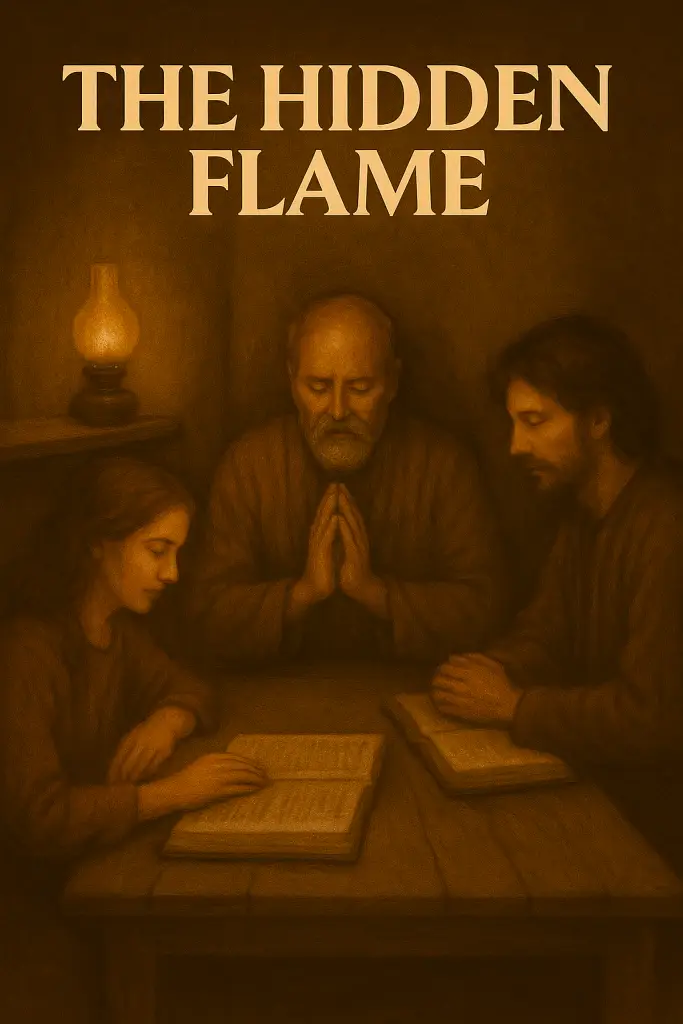
As the fires of large-scale revival cooled and the churches of the Double Reformation settled into formalism, the Lord again preserved His testimony — not through crowds, but through a quiet, dispersed remnant. In the 19th century, scattered throughout England and beyond, believers began breaking bread in simplicity, rejecting ecclesiastical systems, and gathering under the sole Headship of Christ.
John W. Kennedy, in The Torch of the Testimony, highlights two such men: Anthony Norris Groves and John Nelson Darby. Both helped ignite what became known as the Brethren movement — though their paths and emphases sharply diverged. Yet through both, we see the continuation of the hidden flame — the Church outside the camp, under the Lord’s direction alone.
Anthony Norris Groves: A Return to Apostolic Simplicity
Groves, a dentist turned missionary, pioneered in Baghdad and India. He gave up wealth, prestige, and even denominational protection to preach Christ and plant simple, Spirit-led fellowships. His principles were radical for his time:
- No clergy-laity divide
- No appeal to human ordination
- No guaranteed financial support
- No denominational identity
Groves walked by faith and gathered believers who simply met in the name of Jesus, under the government of the Holy Spirit and the authority of the Word. He taught by example that missions do not require machinery — only obedience and trust.
Kennedy calls Groves one of the most significant figures in modern Church history — not for his success, but for his purity.
John Nelson Darby: The Theologian of the Remnant
Darby, a gifted scholar and former Anglican priest, broke with the established Church and helped form assemblies in Ireland and England that refused all denominational labels. He emphasized:
- Christ as the only Head of the Church
- The unity of the Body across all nations
- The weekly breaking of bread
- The role of the Holy Spirit in leading worship and ministry
Darby’s legacy is mixed. He systematized dispensational theology, which Kennedy critiques as an unnecessary framework. Yet his ecclesiology — his vision for a Church gathered simply in Christ’s name — remains profoundly biblical.
The early Brethren assemblies were marked by:
- Simplicity
- Reverence
- Spiritual gifts in operation
- Evangelistic zeal without worldly compromise
They were truly a dispersed but burning remnant.
The Principle of Spiritual Gathering
Kennedy emphasizes that these believers were not trying to build a movement. They simply sought to gather on New Testament ground. They left systems — not to form a new one — but to be free under Christ. Their very separation was a form of testimony.
He writes:
“It was a movement without organization — yet more vital than many organized revivals.”
This flame was not shouted from the rooftops. It flickered quietly in homes, in villages, in remote outposts. But it burned.
Typology: The Hidden Candlestick
Like the lamp in the Tabernacle, shielded from the world’s eyes, this testimony burned not for public spectacle, but for priestly fellowship. These assemblies were like the caves of Obadiah, where prophets were hidden, fed, and prepared — until God would speak again.
Spiritual Insight: The Danger of Systematizing the Spirit
Kennedy warns that even among those who began in the Spirit, man’s hand often tries to codify, control, and reproduce. Darby’s followers eventually fragmented. The simplicity gave way to factions.
But that does not invalidate the flame.
Overcomers must learn to value spiritual freedom — and guard against formalism, even in its subtlest form.
Overcomer’s Checkpoint
- Am I willing to forsake systems for the sake of spiritual reality?
- Do I value the hidden flame, even when it lacks visible support?
- Is Christ truly the Head of my gathering — or has man taken His place?