A Forensic Conclusion to the Testimony of the True Church
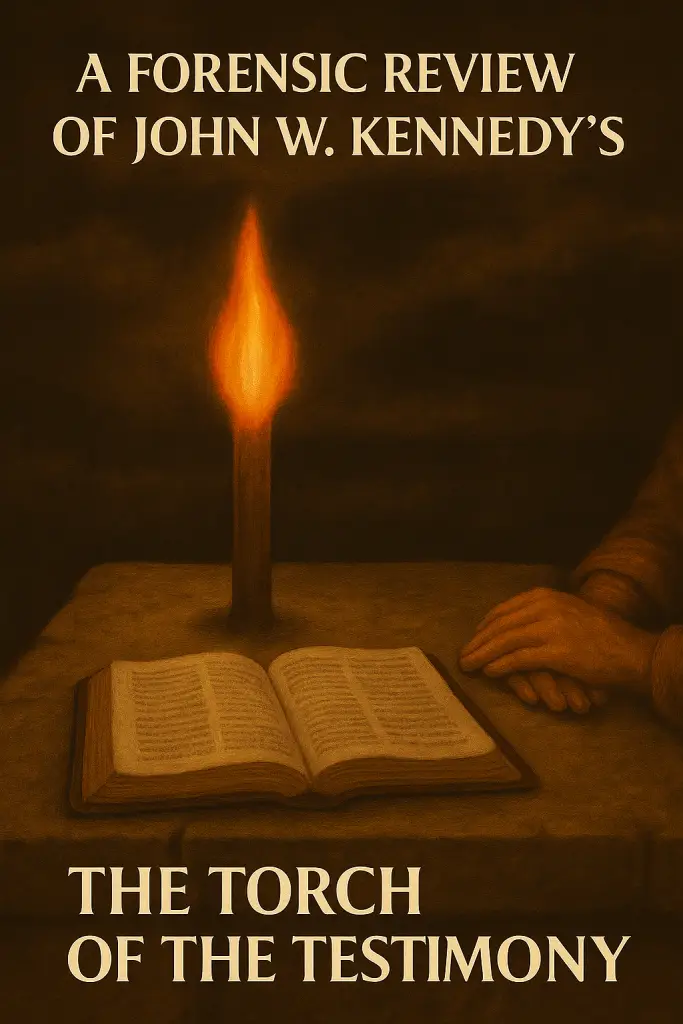
From the fire of Pentecost to the underground caves of the Waldenses, from the public thunder of Luther’s hammer to the quiet flicker of a Brethren lamp in a hidden home, The Torch of the Testimony has passed from hand to hand, heart to heart. This final post in our forensic review turns the spotlight from history to the present. The question is no longer: What did they do? but rather: What will we do?
John W. Kennedy concludes his book not with nostalgia, but with urgency. The Church has always been called to suffer with Christ outside the gate (Heb. 13:13). In every age, there is a line drawn between the crowd and the cross. And in every age, a remnant rises to bear the torch.
The Church We See Today
Kennedy speaks soberly about the present condition of organized religion: bloated with programs, obsessed with numbers, filled with form yet often empty of power. The visible Church has, in many places, settled into a comfortable coexistence with the world — tolerating compromise, pursuing influence, and systematizing spiritual things into machinery that Christ Himself would never build.
And yet… the torch still burns. Not in cathedrals, necessarily. Not in denominations, necessarily. But in living stones, in homes, in small fellowships, in prisons, in rural fields, in underground churches, in repentant hearts — wherever Christ is loved above all, obeyed without delay, and followed at all cost.
The Spiritual Structure That Endures
What structure remains when the systems of man fall? Kennedy reminds us that God is building a house — not made with hands — composed of redeemed men and women, knit together by the Spirit, with Christ Himself as the Cornerstone (Eph. 2:20–22).
This structure includes:
- The Headship of Christ — no man-made hierarchy, no pope, no personality-driven leadership
- The operation of the Holy Ghost — not suppressed by order, but respected in holy reverence
- The equipping of every member — not passive pew-sitting, but active priesthood
- The breaking of bread in sincerity — not a sacrament to be handled only by clergy, but a fellowship of remembrance
- The teaching of the Word — not entertainment, but truth with power
Kennedy does not call us to abandon structure altogether. He calls us to embrace spiritual structure — that which flows from Christ, not from committees.
The Real Cost: Reproach and Suffering
Kennedy is unflinching in his assessment: the cost of bearing the torch is reproach. He writes:
“The call to be outside the camp is a call to suffer with Christ — not just for Christ, but with Him.”
The Church that seeks comfort will never carry the torch. The true Church — the overcoming remnant — is always marked by sacrifice:
- Rejection by the world
- Misunderstanding by fellow believers
- Loneliness, obscurity, financial strain, and spiritual warfare
But this is the pattern of the cross. It is through death that life comes. The kernel must fall to the ground and die (John 12:24). This is how the torch burns — through lives laid down.
The Flame and the Future
Kennedy does not end with despair. He ends with hope. The flame has not gone out — and will not go out. Christ said, “I will build my church, and the gates of hell shall not prevail against it” (Matt. 16:18).
But we must discern: What kind of Church is He building?
Not one of marble halls, but of broken hearts.
Not one of institutional muscle, but of invisible power.
Not one that sits in the seats of culture, but one that kneels at the foot of the cross.
The final days will not be marked by grand awakenings alone. They will be marked by a divided Church — between those who have a name that they live and are dead (Rev. 3:1), and those who “have a little strength, and have kept my word, and have not denied my name” (Rev. 3:8).
Prophetic Typology: The Fire on the Altar
In Leviticus 6:13, God commands:
“The fire shall ever be burning upon the altar; it shall never go out.”
This fire was not manmade. It came from heaven. And it had to be kept burning — not by programs, but by priests. It had to be fed. Tended. Protected.
So it is with the Church. The testimony of Jesus is a living fire. It cannot be handed off to institutions. It must be kept burning in individual hearts, in obedient assemblies, in faithful families.
And just as in Elijah’s day, God still asks: Who will build the altar? Who will call down the fire?
The Overcomer’s Mandate
The torch is now in our hands. We are not called to mimic the past, but to carry forward the same flame. This means:
- We gather simply — in the name of Jesus alone
- We study the Word deeply — as our final authority
- We worship reverently — in Spirit and in truth
- We speak boldly — even when it costs us relationships, platforms, or position
- We suffer willingly — for the joy set before us
The Overcomer is not one who conquers people. He conquers compromise. He endures, he holds fast, he finishes the course.
Kennedy’s book is not a romantic history. It is a call to action. A call to light the torch — again.
Overcomer’s Final Checkpoint
- Will I remain content in systems that suppress the Spirit, or will I go “unto Him without the camp”?
- Am I building with wood, hay, and stubble — or gold, silver, and precious stones?
- Am I preparing a people for the Lord — or entertaining the goats?
- Am I willing to be small, hidden, and despised — if Christ is glorified?
The Torch Still Burns… in You
This is where the story ends — and where yours begins.
Let this final post ignite a holy resolve in you. You do not need a pulpit to be a torchbearer. You need a burning heart. You need clean hands. You need a love for the truth that cannot be bought or silenced.
The flame is still alive. Keep it burning.