How one word — seed — links dominion, warfare, and inheritance throughout Scripture
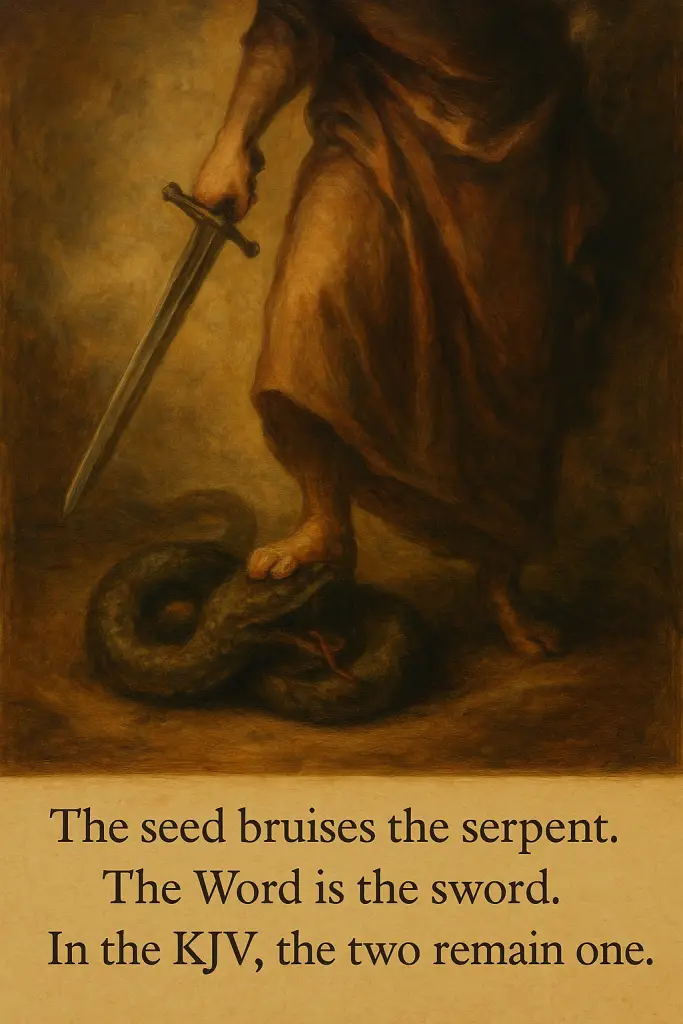
A Word That Threads Through Scripture
In the King James Bible, the word *seed* is treated with divine precision. It is singular when it must be singular — preserving the prophetic clarity of God’s promises from Genesis to Galatians. Modern versions often obscure this, replacing seed with plural words like “offspring” or “descendants,” flattening spiritual meaning and cutting the thread of revelation.
Seed as Dominion and Destiny
From the garden to the covenant with Abraham, and from the cross to the Church, God’s promise of *the seed* carries a weight of warfare and inheritance.
And I will put enmity between thee and the woman, and between thy seed and her seed; it shall bruise thy head… Genesis 3:15
Thy seed shall possess the gate of his enemies. Genesis 22:17
He saith not, And to seeds, as of many; but as of one, And to thy seed, which is Christ. Galatians 3:16
Only the King James Bible preserves this singular thread clearly and consistently — revealing Christ as the fulfillment of the promise, and the Church as the weapon of His victory.
How Modern Versions Cut the Thread
Modern translations like the ESV, NIV, and NKJV often render *seed* as “offspring” or “descendants.” This not only shifts the grammar — it severs the prophetic clarity. Instead of tracing a single line of warfare from Eve to Christ, the meaning becomes pluralized, softened, and vague.
The result? The serpent-crushing prophecy becomes a family line instead of a spiritual war. The gate-possessing promise becomes cultural expansion instead of covenantal dominion.
Word for the Overcomer
You are of the seed of Christ. You carry His life and His sword. Rise up in truth, for you are part of the prophetic line that crushes the serpent’s head.