How the King James Bible reveals the cross hidden in Eve’s curse
Introduction
Why was Eve’s curse centered around sorrow and childbirth? It may seem strange — almost random — until we begin to see the redemptive pattern God was revealing. Eve was not just receiving a consequence; she was embodying a prophecy.
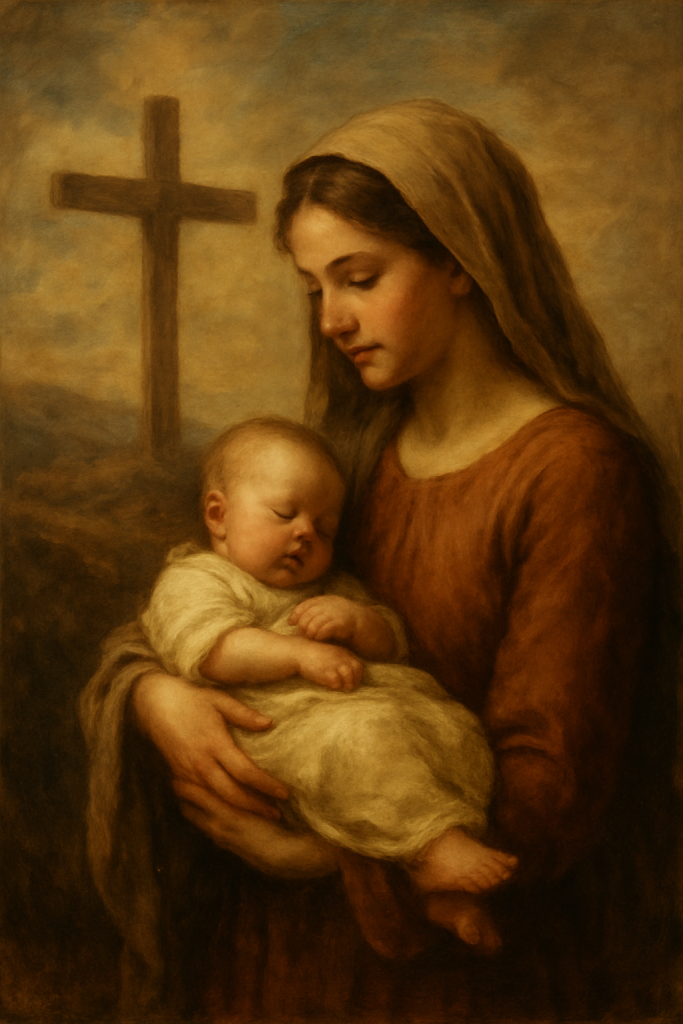
Eve’s Sorrow: A Shadow of the Cross
“I will greatly multiply thy sorrow and thy conception; in sorrow thou shalt bring forth children…” (Genesis 3:16, KJV). This wasn’t just a physical curse — it was a foreshadowing. Eve, the ‘mother of all living’ (Gen. 3:20), became a type of what redemption would require: travail, pain, and then joy. In the fullness of time, Jesus — the last Adam — would suffer the ‘travail of his soul’ (Isaiah 53:11) to bring many sons to glory (Hebrews 2:10).
Modern versions reduce Eve’s curse to mere physical pain. But the KJV preserves the deeper sorrow — a prophetic shadow of Christ’s redemptive suffering.
John 16 and the Pattern of Travail
Jesus echoed this pattern: “A woman when she is in travail hath sorrow, because her hour is come: but as soon as she is delivered of the child, she remembereth no more the anguish, for joy that a man is born into the world” (John 16:21). He was not just describing human birth — He was describing the cross, the resurrection, and the joy of spiritual rebirth.
Modern translations flatten this verse into generic pain. But the KJV connects us to the travail of Christ and the joy of new birth — both physical and spiritual.
The Protoevangelium and the Travail of Christ
In Genesis 3:15–16, God gives the first prophecy of redemption — the seed of the woman would bruise the serpent’s head. Immediately after, He speaks of sorrow in childbirth. The two are not disconnected. Christ, the true Seed, would suffer to bring forth spiritual children. Isaiah 53:10 says, “When thou shalt make his soul an offering for sin, he shall see his seed.”
What modern Bibles render as ‘anguish’ in Isaiah 53:11, the KJV preserves as ‘travail’ — linking Eve’s curse, Christ’s suffering, and our spiritual rebirth.
Paul’s Travail: Echoing the Pattern
In Galatians 4:19, Paul writes, “My little children, of whom I travail in birth again until Christ be formed in you.” The KJV retains the image of spiritual labor — Paul bearing spiritual children through suffering and prayer. Modern versions reduce this to ‘pains of childbirth,’ losing the tie to Isaiah and Eve entirely.
The Word for the Overcomer
God does not waste sorrow. From Eve’s pain to Calvary’s hill, suffering in His plan is not the end — it is the means of bringing forth something new. Endure your sorrow with faith, knowing that resurrection joy is on the other side. For the believer, even travail is laced with promise.
Living Parables of Redemption
Isn’t that just like God? To take our lives — with all their sorrow and shattered places — and turn them into object lessons of hope for others? He did it with His own Son. And now He writes that same redemptive pattern into us.
We become living parables of the resurrection, echoing His love in a world that desperately needs to hear: God still redeems. God still resurrects. God still brings joy out of sorrow.