Giants in the Land: Volume 1 (War for Possession) — Post 16 of 33
Part II — The Wilderness Where Sons are Proven
When the Father Trains His Sons
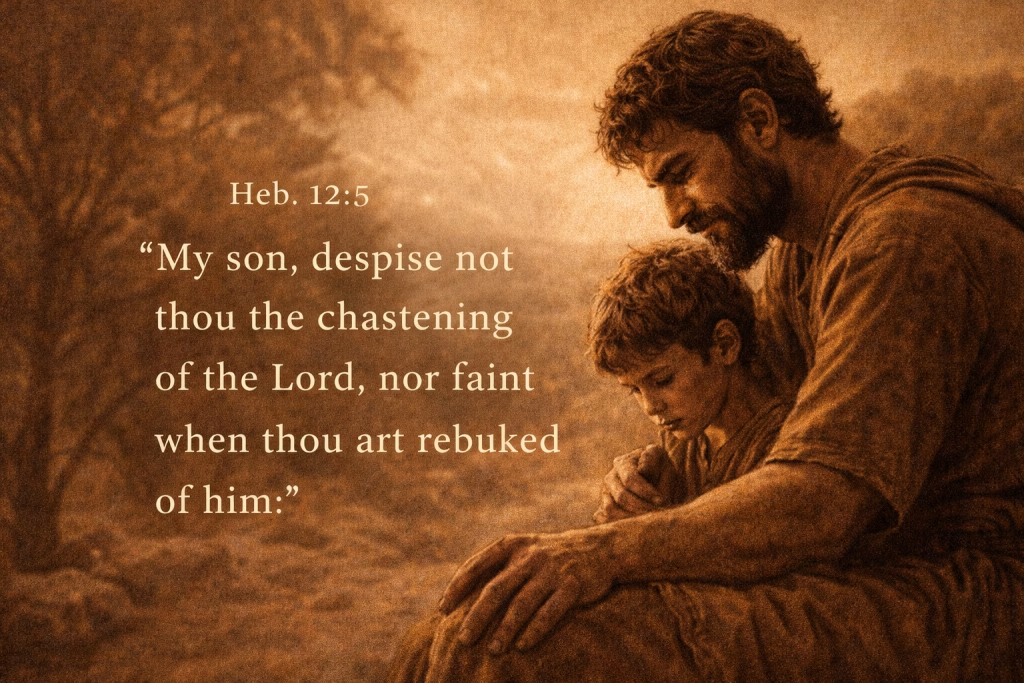
(Hebrews 12:5–11)
One of the most misunderstood experiences in the Christian life is discipline.
When believers encounter correction, hardship, or painful circumstances, many instinctively assume something has gone wrong. Some conclude that God is displeased with them. Others fear they have somehow fallen out of His favor.
But Scripture teaches something very different. What many interpret as rejection is often the clearest evidence of sonship.
The writer of Hebrews reminds believers:
“For whom the Lord loveth he chasteneth, and scourgeth every son whom he receiveth.” (Hebrews 12:6)
God does not discipline His enemies, He disciplines His children.
The Wilderness Misinterpretation
The generation that left Egypt repeatedly misunderstood God’s dealings with them.
When hardship appeared, they concluded that God had brought them out to destroy them. When discipline came, they interpreted it as hostility. Their complaints reveal how easily the human heart can misread God’s intentions.
Yet the wilderness was never meant to be a place of abandonment. It was a school of formation. God was not merely delivering Israel from Egypt; He was preparing them to possess the land.
Correction was part of that preparation.
Punishment vs Training
Much confusion arises because believers confuse punishment with discipline. Punishment belongs to the realm of judgment. It seeks to repay wrongdoing. Discipline belongs to the realm of training. It seeks to form character.
For the believer, punishment for sin has already been borne by Christ. The cross has settled the question of condemnation. But the Father still trains His sons.
Hebrews makes this distinction clear:
“If ye endure chastening, God dealeth with you as with sons; for what son is he whom the father chasteneth not?” (Hebrews 12:7)
Discipline is not the sign of rejection, it is the mark of belonging.
The Pattern of the Father
The writer of Hebrews appeals to a simple human analogy.
Earthly fathers discipline their children for a short time, according to their limited understanding. But God disciplines His children with perfect wisdom and purpose.
“Shall we not much rather be in subjection unto the Father of spirits, and live?” (Hebrews 12:9)
God’s discipline is not arbitrary. It is carefully measured, directed toward a specific outcome and the goal is not humiliation, the goal is holiness.
The Peaceable Fruit
Discipline is rarely pleasant in the moment. Scripture does not pretend otherwise.
“Now no chastening for the present seemeth to be joyous, but grievous…”(Hebrews 12:11)
Yet discipline produces something that comfort never can.
“…nevertheless afterward it yieldeth the peaceable fruit of righteousness unto them which are exercised thereby.”
The phrase “exercised thereby” suggests training, like an athlete being strengthened through repeated exertion.
God’s discipline shapes the inner man. It produces stability, righteousness, and spiritual maturity. What feels painful in the moment often becomes the very thing that prepares a believer for greater inheritance.
Training for the Inheritance
The wilderness generation resisted God’s discipline. Instead of learning from correction, they hardened their hearts. But the believer who understands God’s fatherly dealings learns to receive discipline differently.
Instead of asking:
“Why is God against me?”
the mature believer asks:
“What is the Father teaching me?”
This shift in perspective changes everything. Discipline becomes not an obstacle, but a means of preparation.
God trains His children because He intends them to share in His purposes.
The Overcomer’s Checkpoint
Consider these questions honestly:
- How do I respond when God corrects me?
- Do I interpret discipline as rejection, or as fatherly love?
- What lessons might God be teaching through present difficulties?
- Am I resisting training—or allowing God to shape my character?
The Father disciplines those He loves.
Correction is not evidence that God has turned away. It is often the sign that He is deeply invested in our formation.
Looking Ahead
With this understanding, the believer can face spiritual conflict with greater clarity. God’s discipline prepares His people for the battles ahead.
In the next section we move into The War for Rest, where we will see how provision, peace, and rest must often be contended for before they can be fully possessed.