Series Introduction
Welcome
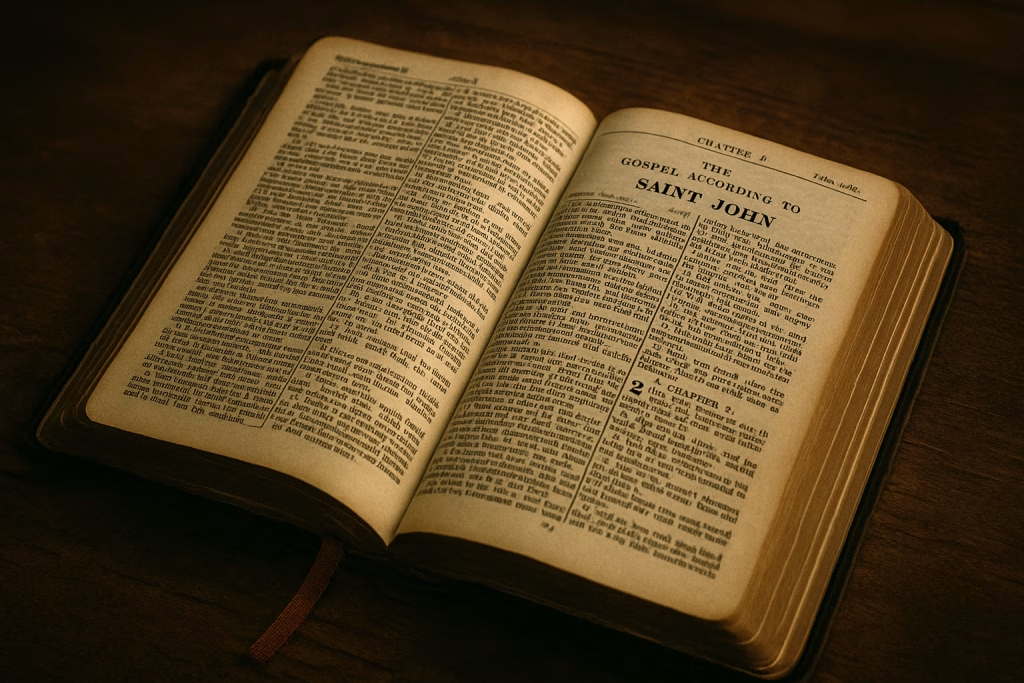
There is a deep crisis in the modern Church — a crisis not of devotion, but of discernment. We live in an hour when the authority of God’s Word is quietly being eroded, replaced by soft language, human philosophy, academic skepticism, and translation committees that believe they have the right to mold Scripture to modern taste.
But God’s Word is not clay.
It is a sword.
The King James Bible has fed revivals, shaped nations, trained disciples, sustained martyrs, and preserved doctrines that modern versions casually dissolve with a footnote or a philosophy.
This series exists because the Bible is under attack — not from the outside, but from within the walls of the Church.
Understanding God’s Word Was Never Limited to Scholars
There is a growing idea in the modern church that unless a believer can parse Greek verbs, sift through lexicons, or decode grammar, he cannot truly understand Scripture.
But if Greek fluency were necessary for spiritual understanding, then all of Greece would be saved. (Humor intended — but the point stands.)
Thankfully, the Holy Spirit is far more effective than linguists. God never built His revelation upon the brilliance of scholars. He built it upon the illumination of the Spirit, accessible to the humble and obedient.
“The entrance of thy words giveth light; it giveth understanding unto the simple.” — Psalm 119:130 (KJV)
This is one of the great reasons I trust the King James Bible:
It preserves the conviction that God intended His Word to be understood, believed, and obeyed by all His people — not hidden behind the gates of academia.
The Spirit, not scholarship, is the Interpreter. The Scriptures, not linguistic expertise, are the authority and Christ, not grammar, is the Light by which we see light.
Why This Series Was Written
I began writing the Why I Trust the KJV series because I kept seeing Christians confused, shaken, and sometimes shipwrecked by modern Bible translations that quietly change key doctrines:
- the deity of Christ
- the blood of Christ
- the cross
- repentance
- holiness
- eternal judgment
- Israel and the Church
- the identity of the believer
- the nature of God Himself
In many cases, a single word change creates an entirely different theology.
Words matter.
And the King James Bible preserves those words with a spiritual integrity modern versions simply do not possess. This series is not about sentimentality or about tradition or about nostalgia. It is about truth.
What This Series Is NOT
This series is not:
- A call to worship a translation.
- A condemnation of those who read other versions.
- A scholarly tirade about manuscripts and families.
- A conspiracy theory.
- A KJV-only cultic stance.
- A claim that Greek is useless or study is unnecessary.
This series is not written to elevate myself above others — but to elevate God’s Word above everything else.
What This Series WILL Show You
Throughout these posts, you will see:
▸ Why doctrinal precision collapses without precise wording
▸ How modern translations weaken core truths subtly and consistently
▸ Why the KJV’s language is spiritually superior, not antiquated
▸ How the KJV preserves inspired patterns, structures, and connections
▸ Where modern versions remove words, downgrade doctrines, or change meaning
▸ Why the identity of the believer is clearer in the KJV
▸ Why the KJV’s vocabulary opens more understanding, not less
▸ The hidden theological philosophy behind many modern renderings
▸ Why the Authorized Version is still unmatched in faithfulness, power, and clarity
Every post in this series is a case study — showing not merely differences, but consequences. The King James Bible is not merely different. It is better — spiritually, doctrinally, devotionally, and prophetically.
Start Reading
To explore the full series, visit the Table of Contents: