(Truth in the Last Days — Post 11)
When a Theory Demands More Than the Text Gives
Why Revelation 20 Is Not About a Future Gospel—and Never Was
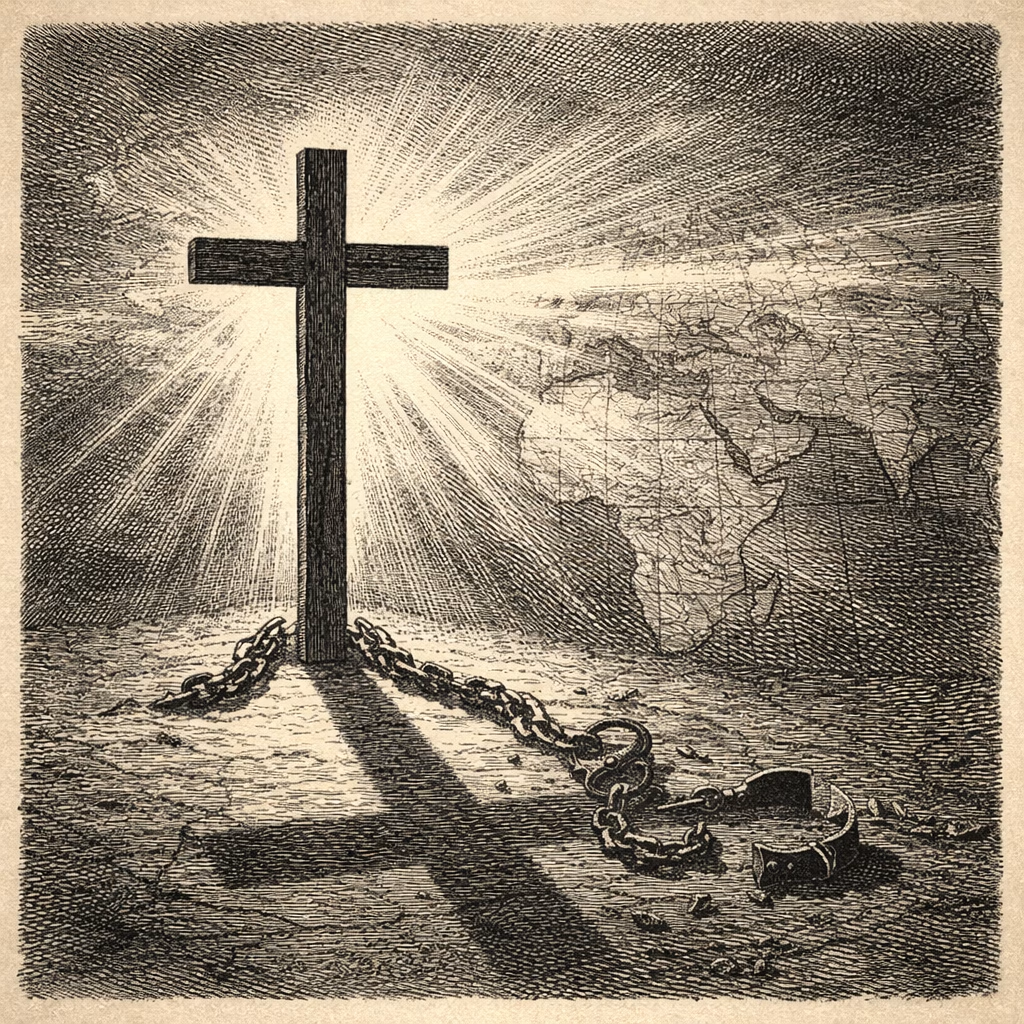
One of the most common objections raised against covenantal or amillennial interpretations of Revelation 20 is this:
“If Satan is bound, evil shouldn’t exist. Since evil clearly remains, this ‘gospel-age binding’ must be an invention to save a theological theory.”
At first glance, the objection sounds compelling. But it rests on a faulty premise—that Scripture defines binding as total inactivity.
It does not.
In fact, Scripture defines the binding of Satan very narrowly, very precisely, and very consistently—and Revelation 20 follows that same biblical pattern.
Step One: Let Revelation Define Its Own Terms
Revelation 20 does not simply say Satan is bound.
It tells us why.
“And cast him into the bottomless pit… that he should deceive the nations no more, till the thousand years should be fulfilled.”
— Revelation 20:3 (KJV)
This phrase controls the entire passage.
The binding is:
- Purpose-limited
- Function-specific
- Not universal incapacitation
The text does not say Satan is bound from:
- tempting individuals
- persecuting believers
- accusing the brethren
- operating spiritually
It says he is bound so that he cannot deceive the nations as nations. That is not a theological workaround, it is basic grammatical honesty.
Step Two: Christ Already Interpreted Revelation 20
Long before John saw the vision, Jesus explained it plainly.
“How can one enter into a strong man’s house, and spoil his goods, except he first bind the strong man?”
— Matthew 12:29 (KJV)
Key fact:
- The same Greek verb (δέω – deō) is used for “bind.”
What happens once the strong man is bound?
- His house is plundered.
- His goods are taken.
- His authority is restricted.
But the strong man still exists, he is not annihilated. He is not inactive and this puts Revelation 20 inside the already-accomplished victory of Christ, not a postponed future scenario.
Step Three: The Cross Was the Moment of Binding
Jesus told us when this binding would occur:
“Now is the judgment of this world: now shall the prince of this world be cast out.”
— John 12:31 (KJV)
Not “will be.”
Not “after a future millennium.”
Now.
Paul confirms it:
“Having spoiled principalities and powers, he made a shew of them openly, triumphing over them in it.”
— Colossians 2:15 (KJV)
Spoiled ≠ destroyed
Spoiled = stripped of authority
Satan was not erased, he was dispossessed.
Step Four: Why the Nations Matter
Before Christ:
- The nations sat in darkness (Isa. 60:2)
- Israel alone had covenant light (Psalm 147:19–20)
- Gentiles were “without God in the world” (Eph. 2:12)
After Christ:
“Go ye therefore, and teach all nations…”
— Matthew 28:19
“God did visit the Gentiles, to take out of them a people for his name.”
— Acts 15:14
This is exactly what Revelation 20 describes:
- Satan no longer able to hold nations in unified deception
- Gospel advancing globally
- Christ drawing all men to Himself (John 12:32)
The binding explains the Great Commission’s success, not its delay.
Step Five: Why the “Complete Inactivity” Standard Is Unbiblical
The objection assumes:
Binding must mean total cessation of activity but Scripture never uses binding that way.
Examples:
- Demons are bound yet conscious (Luke 8:31)
- Fallen angels are reserved in chains yet active (Jude 1:6)
- Satan is resisted, not erased (1 Peter 5:8)
Binding in Scripture = restricted authority, not extinction.
Step Six: Why Patristic Appeals Don’t Settle the Issue
Appeals to “the early church fathers” often assume:
- uniformity (which did not exist)
- doctrinal maturity (which developed gradually)
- interpretive priority (which Scripture never grants)
The apostles—not later commentators—are our standard.
And the apostles teach:
- Christ reigns now (Acts 2:30–36)
- Satan is defeated now (Heb. 2:14)
- The gospel is advancing now (Col. 1:6)
Conclusion: Scripture Explains Revelation—Not the Other Way Around
Revelation 20 does not demand:
- a postponed kingdom
- a future gospel binding
- a restart of redemptive history
It proclaims what Christ already accomplished:
- Satan bound in jurisdiction
- Nations no longer deceived wholesale
- Christ reigning until all enemies are subdued
The binding is not an invention.
It is the victory of the Cross written in apocalyptic language.
Scripture Comparison Chart
Dispensational vs. Covenant Reading of Revelation 20
| Issue | Dispensational Reading | Covenantal/Scriptural Reading |
| Timing of Binding | Future, after Christ’s return | Accomplished at Christ’s first coming |
| Nature of Binding | Total inactivity of Satan | Restriction of authority |
| Textual Limitation | Ignored or minimized | Explicit: “that he should deceive the nations no more” |
| Satan’s Present Activity | Cannot explain ongoing deception paradox | Accounts for limited but active opposition |
| Gospel Mission | Delayed until millennium | Enabled by the binding |
| Matt. 12:29 | Unrelated | Direct interpretive key |
| John 12:31 | Reinterpreted as future | Taken at face value (“now”) |
| Col. 2:15 | Partial victory | Decisive triumph |
| Role of Nations | Future political alignment | Present gospel ingathering |
| Thousand Years | Literal future era | Symbolic reign of Christ |
| Coherence with NT | Fragmented | Unified |
Overcomer’s Insight
The question is not whether Satan is bound absolutely. The question is whether Christ has already triumphed and Scripture answers that with one voice:
All power is given unto me in heaven and in earth. — Matthew 28:18 (KJV)
Christ’s victory is not waiting for a millennium, the millennium is waiting for the Church to believe Christ has already won.