Introduction
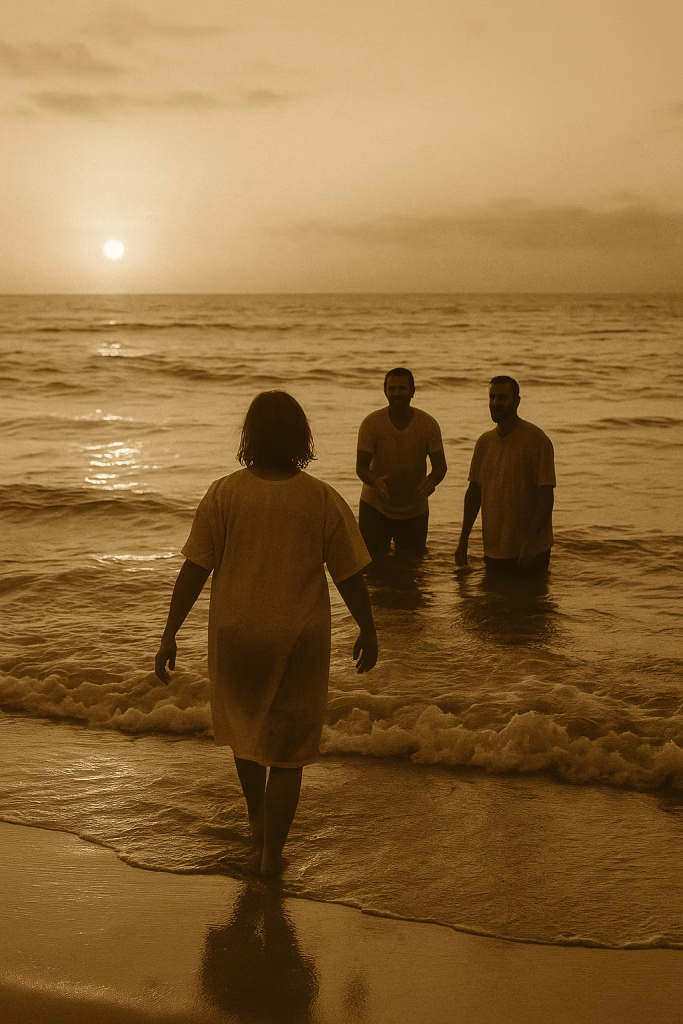
This question strikes right at the heart of the confusion surrounding baptism:
What does Peter mean by “not the putting away of the filth of the flesh, but the answer of a good conscience toward God” (1 Peter 3:21)?
And is Jesus referring to baptism when He tells Nicodemus, “Except a man be born of water and of the Spirit…” (John 3:5)?
These are sincere questions. They deserve a careful, biblical, Spirit-led answer — not the assumptions of tradition or the pressure of sacramental systems.
Let’s walk through both passages, trusting the Word of God.
What Does 1 Peter 3:21 Mean?
“The like figure whereunto even baptism doth also now save us (not the putting away of the filth of the flesh, — 1 Peter 3:21
but the answer of a good conscience toward God,)
by the resurrection of Jesus Christ.”
Peter immediately clarifies two things:
(A) What Baptism Does Not Do
“Not the putting away of the filth of the flesh…”
Peter is explicit:
baptism is not a physical cleansing,
not a moral cleansing,
not a ritual cleansing.
The external water cannot touch the conscience — only Christ’s blood can.
Hebrews 9:14
“…the blood of Christ…shall purge your conscience…”
Hebrews 10:22
“…hearts sprinkled from an evil conscience…”
Water does not do this.
Christ does.
(B) What Baptism Is — “The Answer of a Good Conscience”
The word answer (Greek: eperótēma) means:
- pledge
- appeal
- confession
- response
Baptism is the believer’s response to God after the conscience has already been cleansed by Christ.
This is critical:
Baptism is not the cause of salvation — it is the confession of salvation.
Just as Noah’s salvation was by the ark, not the water,
baptism “saves” only in the sense that it testifies to the reality of faith.
Is “Born of Water” in John 3:5 Talking About Baptism?
Here is the passage:
John 3:5
“Except a man be born of water and of the Spirit, he cannot enter into the kingdom of God.”
Roman Catholicism, Church of Christ doctrine, and some Protestants claim “water” = baptism.
But Jesus explains His own words immediately:
John 3:6
“That which is born of the flesh is flesh;
and that which is born of the Spirit is spirit.”
Jesus places two births side by side:
- Born of water → physical birth (“of the flesh”)
- Born of the Spirit → spiritual birth (“of the Spirit”)
Nicodemus’ reaction proves that is exactly how he understood it:
“How can a man be born when he is old? Can he enter the second time into his mother’s womb?” (John 3:4)
He didn’t think Jesus was talking about baptism.
He thought Jesus meant literal birth, because Jesus was referring to natural birth.
And Jesus rebukes him for not understanding — which makes sense only if the meaning was already known in Jewish teaching.
Why “Born of Water = Baptism” Cannot Fit Scripture
(1) It contradicts Jesus nine verses later.
“Whosoever believeth in him…” (John 3:16)
—not “whosoever is baptized.”
(2) It makes salvation depend on a work.
But salvation is:
“not of works” (Eph. 2:9)
“to him that worketh not, but believeth” (Rom. 4:5)
(3) Jesus never baptized anyone
(John 4:2).
Would He avoid performing the very act required for new birth?
(4) The thief on the cross was saved without baptism.
(5) John 7:38–39 explains “living water” as the Holy Spirit — not baptism.
4. Why Did John Place These Passages Together?
Some argue John intentionally structured the chapter to point to baptism.
But the entire chapter is about:
- the new birth
- the Spirit
- the cross
- judgment
- believing
- light and darkness
Baptism is never mentioned — not once — in Jesus’ teaching here.
The placement is perfect without forcing sacramental meaning into it.
Conclusion: The Simple, Biblical Truth
1 Peter 3:21 teaches that baptism is a figure, not the cause of salvation.
It is the believer’s response of a conscience already cleansed by Christ.
John 3:5 teaches the necessity of two births:
- the first: water (natural birth),
- the second: Spirit (the supernatural birth God gives).
Neither passage teaches salvation by baptism.
Scripture always points salvation back to Christ, never to a ritual.
“But as many as received him…
which were born… of God.” (John 1:12–13)
Christ saves.
Christ cleanses.
Christ makes alive.
Baptism declares what He has already done.