Why “Kings” Matters in Revelation 1:6 and 5:10
The King James Version (KJV) is one of the only major translations that correctly retains the word “kings” in Revelation 1:6 and Revelation 5:10 — in harmony with the spiritual authority and reigning identity of the Church taught throughout the New Testament.
Let’s break it down:
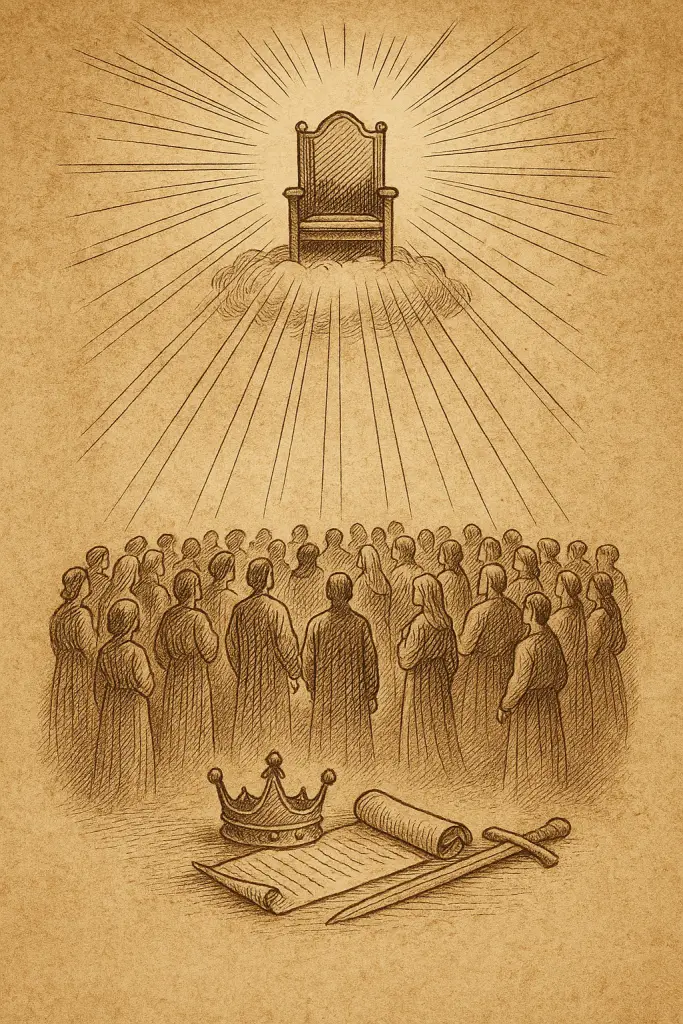
Revelation 1:6 (KJV)
“And hath made us kings and priests unto God and his Father; to him be glory and dominion for ever and ever. Amen.”
Revelation 5:10 (KJV)
“And hast made us unto our God kings and priests: and we shall reign on the earth.”
What Do Modern Versions Say?
ESV
- Rev 1:6 — “made us a kingdom, priests to his God and Father…”
- Rev 5:10 — “made them a kingdom and priests to our God, and they shall reign…”
NIV
- Rev 1:6 — “has made us to be a kingdom and priests…”
- Rev 5:10 — “You have made them to be a kingdom and priests…”
NASB, CSB, NLT, NET, etc.
- All substitute “kings” with “a kingdom.”
Why Is That a Problem?
They Change the Subject
Instead of speaking about what the believer is (a king, a priest), modern versions turn it into what believers belong to (a kingdom). That dilutes the personal authority and identity granted to each saint.
They Undermine Covenant Reality
The theme of royal priesthood comes from Exodus 19:6 and is fulfilled in 1 Peter 2:9 and Revelation — describing the Church not just as subjects in a kingdom, but as those seated with Christ and reigning with Him.
“But ye are a chosen generation, a royal priesthood, an holy nation…” — 1 Peter 2:9, KJV
They Soften the Believer’s Authority
Calling us “kings and priests” emphasizes that believers are appointed to reign — not just in the future, but now in spiritual dominion (Romans 5:17, Ephesians 2:6). “A kingdom” flattens this out into generic community language — removing the edge of personal authority and calling.
Which Versions Get It Right?
Only a few preserve the language of “kings and priests” in both Revelation 1:6 and 5:10:
- King James Version (KJV)
- New King James Version (NKJV) (though highly questionable elsewhere, it retains this wording here). See NKJV Omissions
- Jubilee Bible 2000
- 1599 Geneva Bible
Most modern critical-text-based translations remove “kings”, following manuscripts that obscure the royal identity of the believer.