Why the “Jewish roots” of Christianity are not a cultural burden but the divine foundation of redemption.
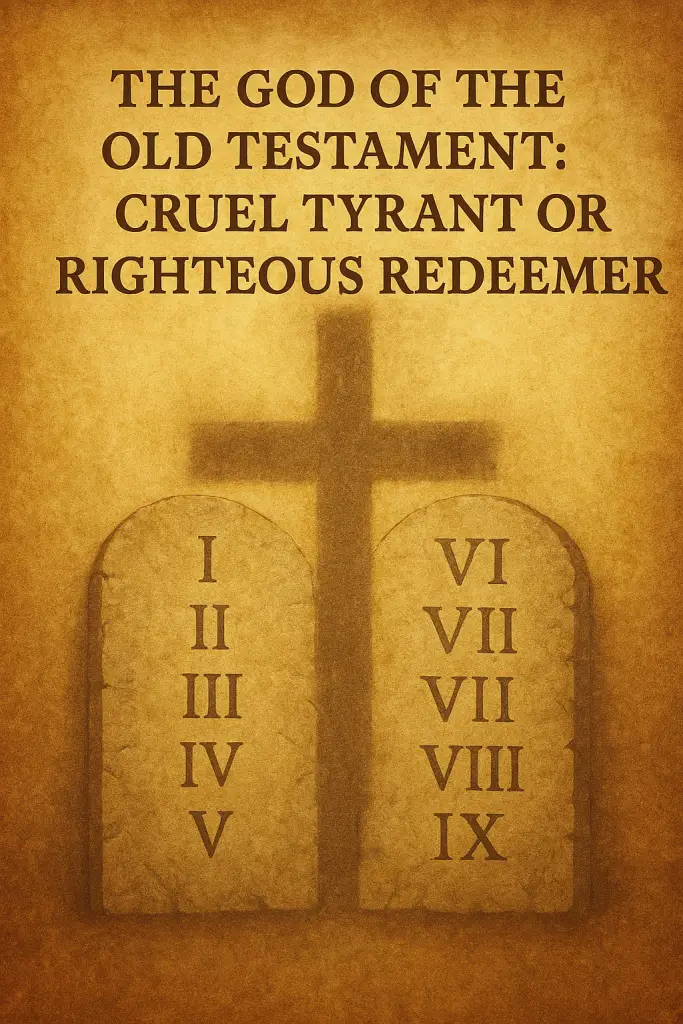
Understanding the God of Israel and the Roots of Christianity
It takes honesty and courage to admit when something in the Bible offends our modern sensibilities. Many who begin reading the Old Testament experience the same discomfort: it feels foreign, harsh, even barbaric. But if we read long enough, and with spiritual eyes, we discover that what seems cruel on the surface is actually God revealing His holiness, justice, and mercy through human history—one step at a time.
Christianity Didn’t Begin as a Cultural Movement — It Began as a Divine Invasion
It’s true that Jesus lived within Second Temple Judaism. Yet His purpose was never to preserve Jewish customs—it was to fulfill them. He came as the promised Seed of Abraham, the true Temple, the final Sacrifice, and the Light to all nations (Genesis 12:3; Isaiah 49:6; Galatians 3:8).
Christianity was never meant to be “Jewish” in a cultural sense. It began in Israel so it could bless the entire world. Within one generation the Church included Greeks, Romans, Africans, and Asians. What unites believers isn’t race or ritual—it’s the new birth by the Spirit of God.
“There is neither Jew nor Greek… for ye are all one in Christ Jesus.”
— Galatians 3:28 (KJV)
The God of the Old Testament Is the Same Loving Father Revealed in Christ
Some see the Old Testament as “angry God” and the New Testament as “loving Jesus.” But Jesus Himself said, “I and my Father are one” (John 10:30).
Every act of judgment in the Old Testament was preceded by long patience and mercy (Genesis 15:16; Jonah 4:2). The God who judged Egypt had also given them centuries of prosperity before Pharaoh enslaved Israel and killed their sons. Judgment only comes when mercy is despised.
The same God who parted the Red Sea later hung on a cross and bore His own wrath. Every stroke of justice in Exodus or Judges pointed forward to Calvary—where mercy and truth met together (Psalm 85:10).
The “Barbarism” of Israel Was Meant to Reveal the Barbarism of Sin
The ancient world was vicious. What made Israel distinct was not that they fought wars, but that God restrained their evil and taught them holiness through law and sacrifice. The blood of animals was never the goal—it was a picture.
Those sacrifices foreshadowed the final offering of Christ, the Lamb of God (Hebrews 10:1–12). The Law exposed sin so that grace could later abound. What seems primitive was God painting with dark colors to make the light of the cross shine brighter.
The Boredom Lifts When You Start Seeing Christ
Many find the Old Testament “boring” until they realize it’s all about Jesus. He said, “Search the scriptures… they are they which testify of me” (John 5:39).
Every story becomes alive when you look for Him:
- Adam reveals Him as the last Adam.
- Noah’s Ark pictures salvation through Him.
- The Passover lamb, the manna, the Tabernacle—all point to His redemptive work.
Once you see that the Old Testament is the shadow, and Christ the substance, you’ll never find it dull again.
The Real Divide Is Not Between Jew and Gentile, but Flesh and Spirit
The discomfort with “Jewish roots” often comes from viewing Christianity as a culture rather than a kingdom. But Jesus told Nicodemus, “Ye must be born again.” The New Covenant creates a new race—born not of blood, nor of the will of man, but of God (John 1:13).
The true Israel now is spiritual, not ethnic (Romans 9:6–8). You don’t have to share Abraham’s DNA—you share his faith. Through Christ, you become part of God’s eternal family.
“And if ye be Christ’s, then are ye Abraham’s seed, and heirs according to the promise.”
— Galatians 3:29 (KJV)
In Summary
Christianity is not a Jewish invention—it is God’s revelation to all mankind through the people He chose as His stage. What began in Israel was designed to embrace the world.
If the Old Testament God feels cruel, look again at the cross—that’s the same God, suffering for His enemies, praying, “Father, forgive them.” That’s who He has always been.
Overcomer’s Checkpoint
- Have I judged God’s justice before understanding His holiness?
- Do I read the Old Testament looking for Christ, or only for moral lessons?
- Do I see myself as part of a heavenly family that transcends race and ritual?
Scripture References (KJV)
Genesis 12:3; Isaiah 49:6; John 1:13; John 5:39; John 10:30; Galatians 3:8, 28–29; Romans 9:6–8; Psalm 85:10; Hebrews 10:1–12; Jonah 4:2.