Introduction: Literal or Symbolic
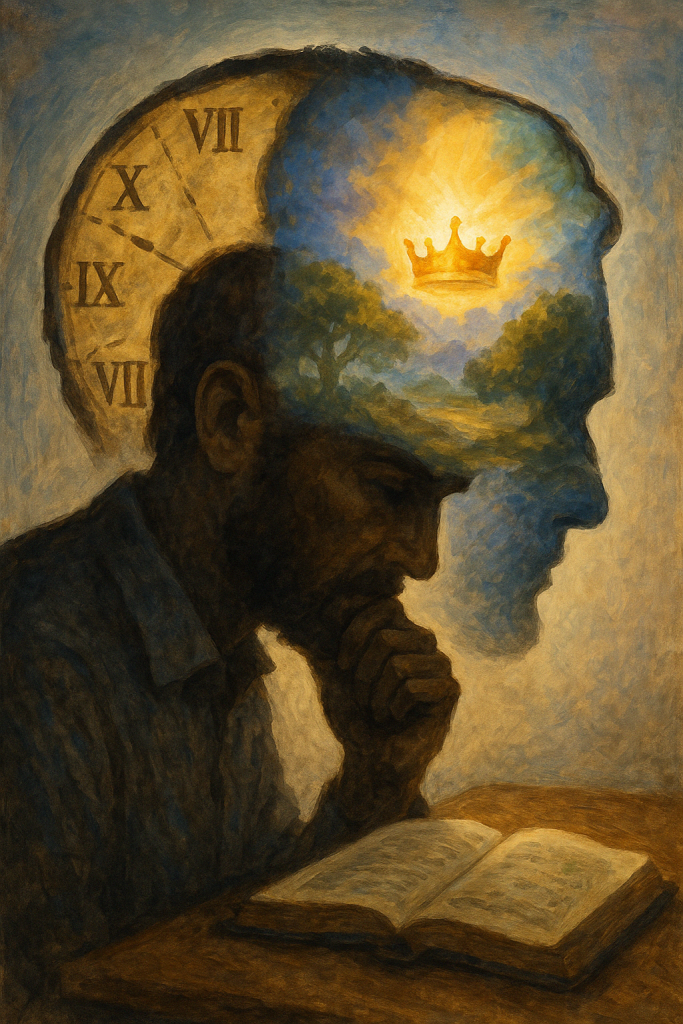
The “thousand years” in Revelation 20 is often misunderstood as a literal timespan. However, scripture and tradition suggest it symbolizes the present age of Christ’s Messianic reign—an epoch that began nearly two millennia ago and continues until His return. This article explores its beginning, purpose, and end, showing it as a spiritual reality, not a precise calendar period.
The Symbolic Nature of the Thousand Years
Many struggle to see the “thousand years” as the current era of Christ’s rule, now over twice the length of a literal thousand years. Consider these symbolic elements in Revelation 20:
- The “dragon” is not a literal beast but “that old serpent, called the Devil, and Satan” (Revelation 20:2, KJV).
- The chain and prison are not physical but represent Satan’s restraint from fully deceiving the nations.
- Likewise, the “thousand years” is not a literal measure but an emblem of a complete, divinely appointed age.
The Apostle Peter supports this: “But, beloved, be not ignorant of this one thing, that one day is with the Lord as a thousand years, and a thousand years as one day” (2 Peter 3:8, KJV). This echoes ancient Jewish thought, such as the Talmud (Sanhedrin 97a), where Rabbi Eliyahu divided world history into three symbolic two-thousand-year periods: chaos, Torah, and the Messianic age. Though not exact, the Messianic period aligns with the Christian era, followed by judgment and eternal rest.
When Did the Thousand Years Begin?
The “thousand years” began when Christ ascended and received His kingdom:
- After His resurrection, Jesus declared, “All power is given unto me in heaven and in earth” (Matthew 28:18, KJV), and ascended “in a cloud” (Acts 1:9, KJV).
- This fulfills Daniel’s vision: “I saw in the night visions, and, behold, one like the Son of man came with the clouds of heaven, and came to the Ancient of days, and they brought him near before him. And there was given him dominion, and glory, and a kingdom, that all people, nations, and languages, should serve him: his dominion is an everlasting dominion, which shall not pass away” (Daniel 7:13-14, KJV).
- From Pentecost (circa 33 AD), Christ reigns at God’s right hand, directing history toward the restoration of a faithful remnant.
Satan was bound at this time: “And I saw an angel come down from heaven, having the key of the bottomless pit and a great chain in his hand. And he laid hold on the dragon, that old serpent, which is the Devil, and Satan, and bound him a thousand years” (Revelation 20:1-2, KJV). This binding limits Satan’s power, enabling the gospel to spread.
The Reign of Believers with Christ
During this age, faithful believers participate in Christ’s reign:
- Paul writes, “But God, who is rich in mercy, for his great love wherewith he loved us, even when we were dead in sins, hath quickened us together with Christ… and hath raised us up together, and made us sit together in heavenly places in Christ Jesus” (Ephesians 2:4-6, KJV).
- John sees this in vision: “And I saw thrones, and they sat upon them, and judgment was given unto them: and I saw the souls of them that were beheaded for the witness of Jesus, and for the word of God, and which had not worshipped the beast, neither his image, neither had received his mark upon their foreheads, or in their hands; and they lived and reigned with Christ a thousand years” (Revelation 20:4, KJV).
- The “beheaded” and those resisting the Beast represent all faithful believers reigning as “priests of God” (Revelation 20:6, KJV) through the Spirit.
Jesus commissioned His followers: “As my Father hath sent me, even so send I you” (John 20:21, KJV). Thus, we reign with Him now, advancing His kingdom.
When Do the Thousand Years End?
The “thousand years” ends with Satan’s release and Christ’s return:
- “And when the thousand years are expired, Satan shall be loosed out of his prison, and shall go out to deceive the nations” (Revelation 20:7-8, KJV).
- This aligns with God’s purpose: “And for this cause God shall send them strong delusion, that they should believe a lie: that they all might be damned who believed not the truth, but had pleasure in unrighteousness” (2 Thessalonians 2:11-12, KJV).
- Christ then returns: “Then cometh the end, when he shall have delivered up the kingdom to God, even the Father; when he shall have put down all rule and all authority and power. For he must reign, till he hath put all enemies under his feet. The last enemy that shall be destroyed is death” (1 Corinthians 15:24-26, KJV).
- The resurrection and judgment follow: “And I saw a great white throne… and the dead, small and great, stand before God… and whosoever was not found written in the book of life was cast into the lake of fire” (Revelation 20:11-15, KJV).
This final hour—possibly near as of April 08, 2025—ushers in the eternal state after Satan, the Beast, death, and Hades are destroyed (Revelation 20:10, 14).
Conclusion
The “thousand years” is the present age of Christ’s reign, beginning with His ascension (circa 33 AD) and ending at His second coming. It is not a literal timeframe but a symbolic epoch of gospel victory, believer participation, and Satan’s restraint—culminating in judgment and eternity. As Jesus reigns now, so we are called to live faithfully, anticipating His glorious return.
See Dispensationalism, Zionism and Christ’s Present Reign
\
Wonderful! I just read your most recent article “The Thousand Years.”
Very well written, clear and coherent. Now I’m going to go back and start reading the other articles. Keep it up, brother. The TRUTH must be spoken!
Thank you, Chris. Appreciate your “keen eye”, going forward.