Giants in the Land: Volume 1 (War for Possession) — Post 11 of 33
Part II — The Wilderness Where Sons are Proven
Cain’s Offering and the Danger of Religious Substitution
Religious Activity Is Not Spiritual Obedience
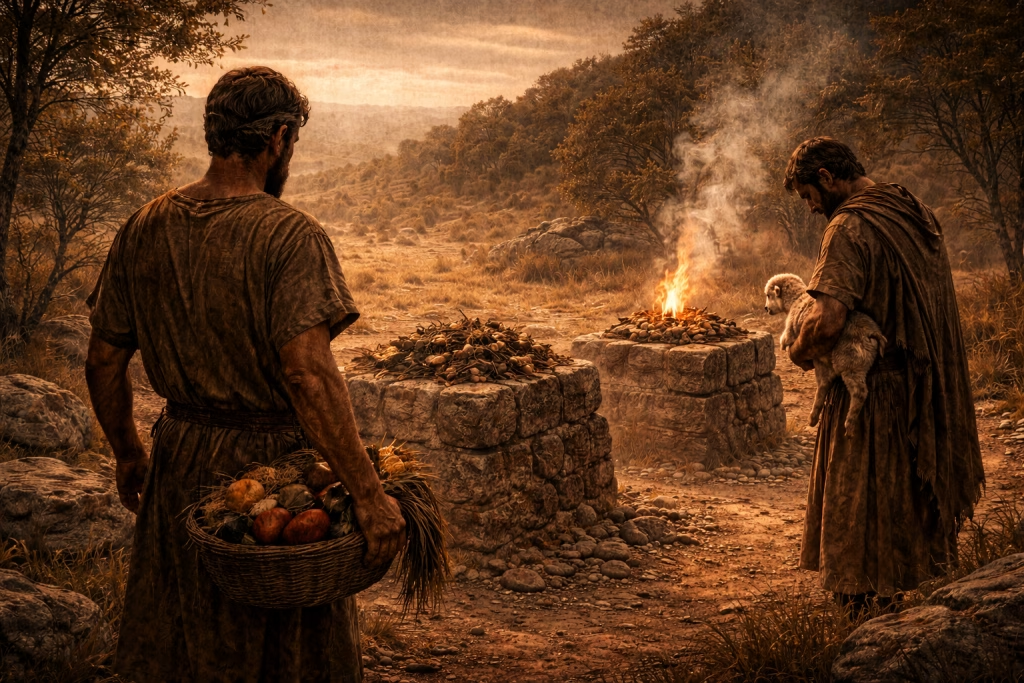
One of the most dangerous errors in the wilderness is not rebellion—but replacement.
Cain did not reject God, and he did not refuse to worship. Cain also did not withhold effort. He simply offered what God did not ask for. That is what makes false piety so lethal. It does not look like sin. It looks like devotion.
Scripture says plainly:
And the LORD had respect unto Abel and to his offering: But unto Cain and to his offering he had not respect. —. — (Gen. 4:4–5, KJV
Notice carefully: God rejected Cain, not merely his gift.
This was not a problem of agriculture versus livestock. It was a problem of obedience versus self-direction.
The First Religious Substitute
Abel came by faith, Cain came by effort.
Hebrews tells us why Abel was accepted:
By faith Abel offered unto God a more excellent sacrifice than Cain…. — (Heb. 11:4)
Faith obeys revelation but flesh rejects revelation and always tries to improvise which is always wrong because it is self-directed.
Cain brought the fruit of the ground—what he deemed appropriate. Abel brought what God had already revealed as acceptable. Cain substituted sincerity for submission.
Self and sincerity is the birth of religious flesh.
Why God Warned Cain Before He Judged Him
God did not ambush Cain with rejection. He warned him.
If thou doest well, shalt thou not be accepted? and if thou doest not well, sin lieth at the door… — (Gen. 4:7)
Sin here is not passive, it is personified. It is crouching, it desires mastery. Cain’s offering was not neutral—it opened the door.
False worship always precedes false violence. When obedience is replaced with self-expression and exposed/rejected, resentment follows. Cain’s anger was not toward Abel—it was toward God’s authority.
Religious Zeal Without Knowledge
Paul describes the same spirit centuries later:
For I bear them record that they have a zeal of God, but not according to knowledge. — (Rom. 10:2)
This is Cain in theological form. Zeal without obedience becomes self-righteousness. His religious activity veiled no regard for submission and in the end it became accusation. Cain’s rebellious sacrifice annulled faith becoming hostility towards the truth.
Cain did not want correction—he wanted validation. Religious flesh always wants praise and honor.
The Wilderness Produces Many Cains
Israel murmured because they believed God owed them comfort. Cain offered because he believed God owed him acceptance. Both share the same root: self-authored righteousness.
This is why wilderness religion is filled with:
- Loud devotion
- Visible sacrifice
- Religious language
- Minimal obedience
And why God repeatedly says:
To obey is better than sacrifice…. — (1 Sam. 15:22)
God is not impressed by what costs you if it replaces what He commanded.
Christ Confronted Cain’s Descendants
Jesus addressed this same spirit directly:
Many will say to me in that day, Lord, Lord, have we not…? And then will I profess unto them, I never knew you…”. — (Matt. 7:22–23)
These were not pagans, they were religious workers. They brought offerings, works and had all the evidence ready for the Lord.
But, they did not bring obedience.
False Piety Keeps Giants in the Land
Cain was not rejected because he failed, he was rejected because he refused correction. False piety does not drive out giants; it does the exact opposite; it feeds them. When obedience is partial, territory remains occupied and when sacrifice replaces surrender, inheritance is delayed.
This is why many believers remain stuck—not because they are wicked, but because they are busy without submission.
The Overcomer’s Checkpoint
Not every reader needs this question—but many do.
Ask honestly:
- Am I doing what God asked—or what feels right to me?
- Have I substituted service for surrender?
- Do I resist correction while increasing activity?
- Is my devotion producing obedience—or defending my preferences?
Cain brought fruit, Abel brought faith.
Only one possessed the inheritance.
Forward Glance
False piety leads naturally to condemnation, because self-made righteousness can never stand before God. In the next post, we will confront the giant of condemnation—and expose how the law pretends to be holiness when Christ is not rightly known.
That is where many wilderness believers finally understand why their efforts have never brought rest.