Series — Refined by Fire: Walking Through Suffering with Christ — Post 11
How God Teaches His Children Through Adversity
When Our Understanding Reaches a Cliff
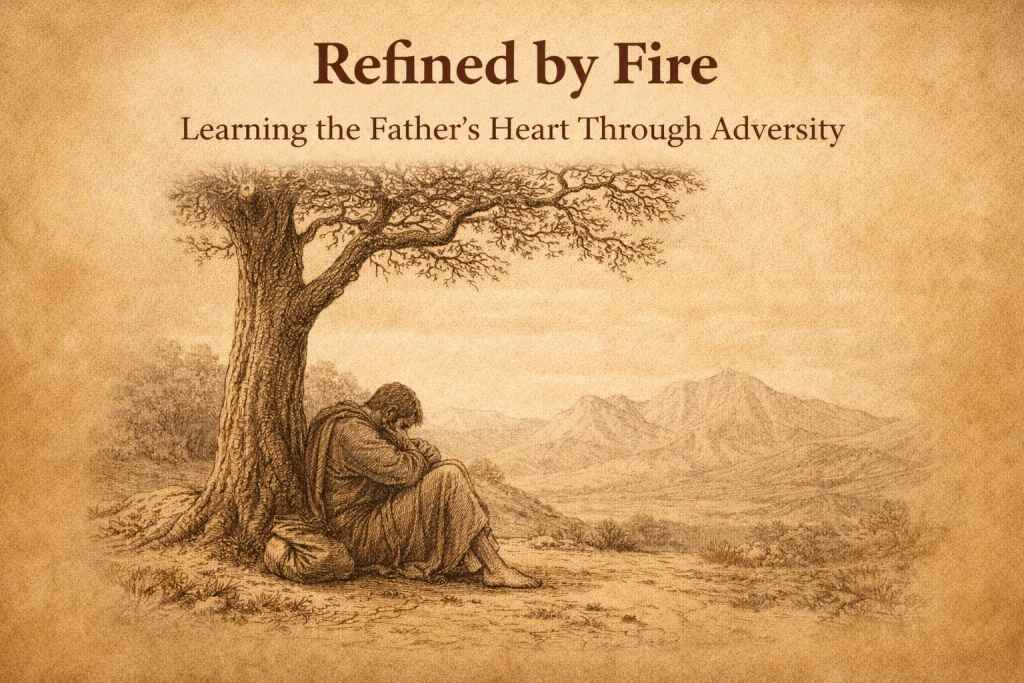
One of the great transitions of the Christian life is the transfer of trust — from self to God. But no man abandons his own understanding while it still works for him. The mind must fail before the heart can believe.
“Lean not unto thine own understanding.” — Prov. 3:5 (KJV)
For many believers, that failure feels like falling off a cliff. Their reasoning collapses. Their wisdom gives out. Their strength runs dry.
This is not punishment. This is mercy.
The Revelation of Tenderness
Some come to Christ knowing His holiness, wrath, judgment, and justice. They understand the death they deserved. Few, however, know the tenderness of Christ.
But the same Scriptures that speak of God’s severity speak of His care:
“…for he careth for you.” — 1 Pet. 5:7 (KJV)
Lion and Lamb are not two experiences of God — they are one Christ. If we knew only His majesty and not His compassion, we would draw back and never come near. If we knew only His softness and not His fearfulness, we would never bow.
God means to reveal both.
Adversity as Tutoring, Not Punishment
The world calls adversity “bad luck,” “misfortune,” or “hard seasons.” Hebrews calls it sonship.
“For whom the Lord loveth he chasteneth… if ye endure chastening, God dealeth with you as with sons.” — Heb. 12:6–7 (KJV)
Chastening is not wrath against sinners — it is training for sons and daughters. The goal is transformation, not condemnation.
The Father is not managing sinners; He is raising children.
Fear of the Next Hammer
Some believers, once rescued, begin to expect the next blow. Their hearts brace for impact. They assume that every answered prayer must be followed by equal adversity, as if God were balancing scales.
But fear is not the Spirit’s pedagogy.
Fear anticipates wrath.
Faith anticipates help.
When Paul pleaded for the removal of his thorn, the answer was neither silence nor punishment:
“My grace is sufficient for thee.” — 2 Cor. 12:9 (KJV)
Grace is not a hammer. Grace steadies.
The Weariness of Growing Up
Believers often think weariness proves defeat. Scripture says it often proves the opposite. Elijah collapsed beneath a juniper tree and prayed to die. David soaked his couch with tears. Paul “despaired even of life.” (2 Cor. 1:8)
Jesus Himself slept through storms.
Fatigue is not failure — it is the flesh discovering it cannot be God.
What Rest Actually Is
- Rest is not inactivity.
- Rest is not escape.
- Rest is not the absence of trouble.
- Rest is confidence in God in the midst of trouble.
“We which have believed do enter into rest.” — Heb. 4:3 (KJV)
Rest begins not when trials stop, but when panic stops.
Growing As Children Grow
Discipleship rarely feels spiritual. It feels human. Children grow slowly — stumbling, weeping, trying, falling, napping, and rising. God is not ashamed of that process.
We are.
But the Father teaches for relationship, not performance. He disciplines with love, not wrath. He gives adversity to reveal tenderness and tenderness to reveal Himself.
The end of suffering is not when life becomes easy, but when we know Christ more truly.