What the Sheep and the Goats Really Reveal
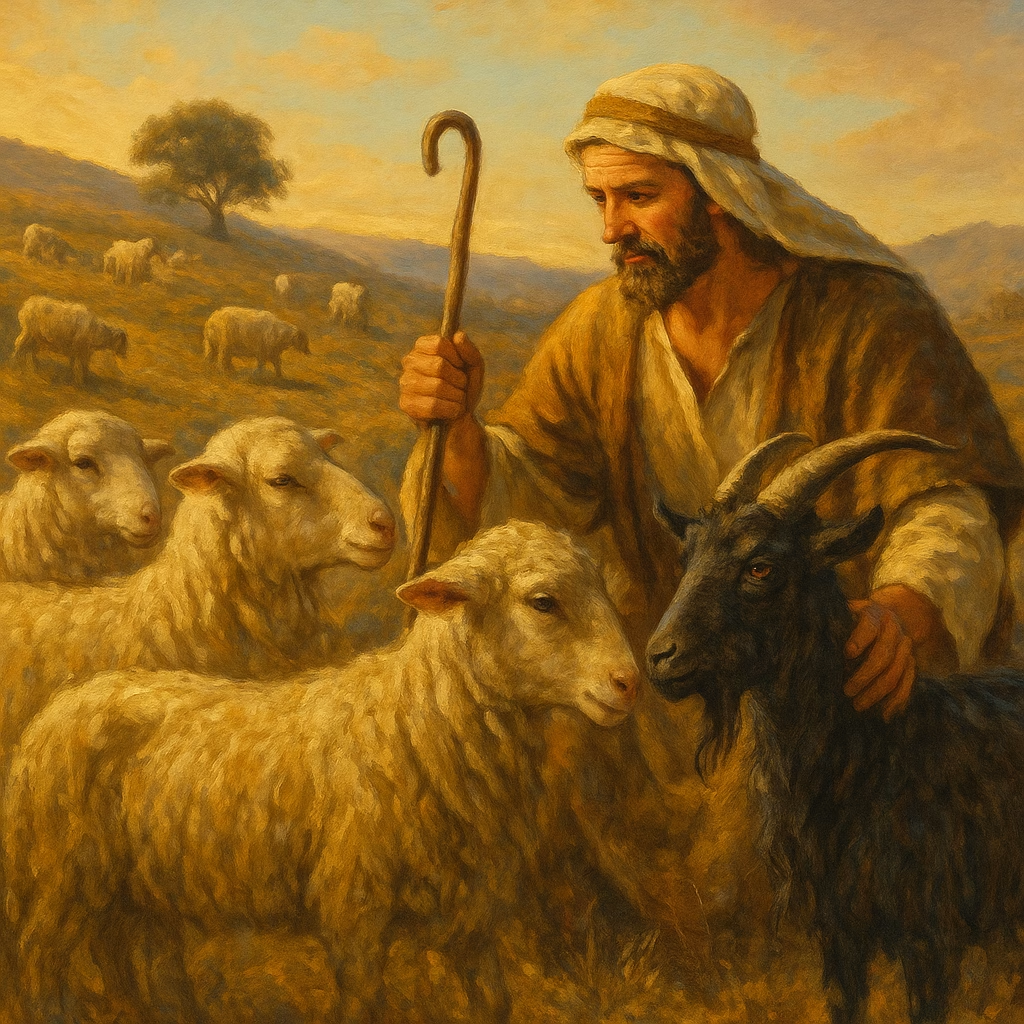
Matthew 25:31–46 is one of those passages that seems to place works at the center of final judgment. But when read in the full counsel of Scripture, we see it’s not about earning salvation — it’s about revealing the reality of it. The sheep and the goats are not divided by what they did to earn heaven, but by what their lives revealed about who their Shepherd was.
The Setting of the Judgment
When the Son of man shall come in his glory, and all the holy angels with him, then shall he sit upon the throne of his glory: And before him shall be gathered all nations: and he shall separate them one from another, as a shepherd divideth his sheep from the goats. Matthew 25:31–32
This is not a parable about earning heaven but about revealing hearts. Christ is not weighing good deeds against bad — He’s revealing the hidden life within. The division is not arbitrary; it’s based on nature. Sheep follow the Shepherd because they are His.
The Evidence of True Faith
For I was an hungred, and ye gave me meat: I was thirsty, and ye gave me drink: I was a stranger, and ye took me in: Naked, and ye clothed me: I was sick, and ye visited me: I was in prison, and ye came unto me. Matthew 25:35–36
Notice: the sheep are surprised. They weren’t keeping score — they were simply living out a life that flowed from love. Faith works through love (Galatians 5:6). True faith produces fruit, and that fruit is the evidence of life, not the means to obtain it.
The Goats: Professing Without Possessing
Then shall they also answer him, saying, Lord, when saw we thee an hungred, or athirst, or a stranger, or naked, or sick, or in prison, and did not minister unto thee? Then shall he answer them, saying, Verily I say unto you, Inasmuch as ye did it not to one of the least of these, ye did it not to me. Matthew 25:44–45
The goats call Him ‘Lord’ — but never knew Him. They had religion, not relationship. They served when convenient, not out of love. The absence of fruit reveals the absence of life.
The goats, much like the Pharisees, were indeed scorekeepers — they operated on a transactional mindset rather than a relational one. They served with expectation, not affection.
If we paraphrase their attitude:
“When did we see You…? We did plenty of good things — where’s our credit?”
That line exposes the spirit of religion — outward obedience without inward life.
The sheep, on the other hand, live from union with the Shepherd. Their love flows naturally. They don’t keep a ledger because their obedience is organic, born of the new nature.
“The Pharisees kept score; the sheep keep faith.
The goats performed; the sheep were transformed.”
Works as the Fruit of Faith, Not the Root
James 2:17 says, Faith, if it hath not works, is dead, being alone. | But James never says works save. He says faith without works isn’t real faith. Just as a tree proves itself by its fruit, faith proves itself by its life. Works are not the price of redemption — they are the proof of regeneration.
The Gospel Harmony
For by grace are ye saved through faith; and that not of yourselves: it is the gift of God: Not of works, lest any man should boast. For we are his workmanship, created in Christ Jesus unto good works, which God hath before ordained that we should walk in them. Ephesians 2:8–10
Paul and Jesus agree perfectly. We are saved by grace, through faith — but saving faith always walks in good works. Faith without transformation is imitation. The sheep do not become sheep by serving; they serve because they are sheep.
Conclusion
Matthew 25 is not about earning heaven; it’s about heaven revealing its own. At the judgment, the Shepherd is not surprised by His sheep — they bear His likeness. Faith that saves is faith that works — not because it must, but because it can do nothing else.