Why is 2 Timothy 2:15 Missing or Grossly Changed?
Introduction
Most Christians are familiar with the call to study the Word. But what if I told you that the only verse in the entire Bible that commands us to study—and tells us how to do it—is found only in the King James Version?
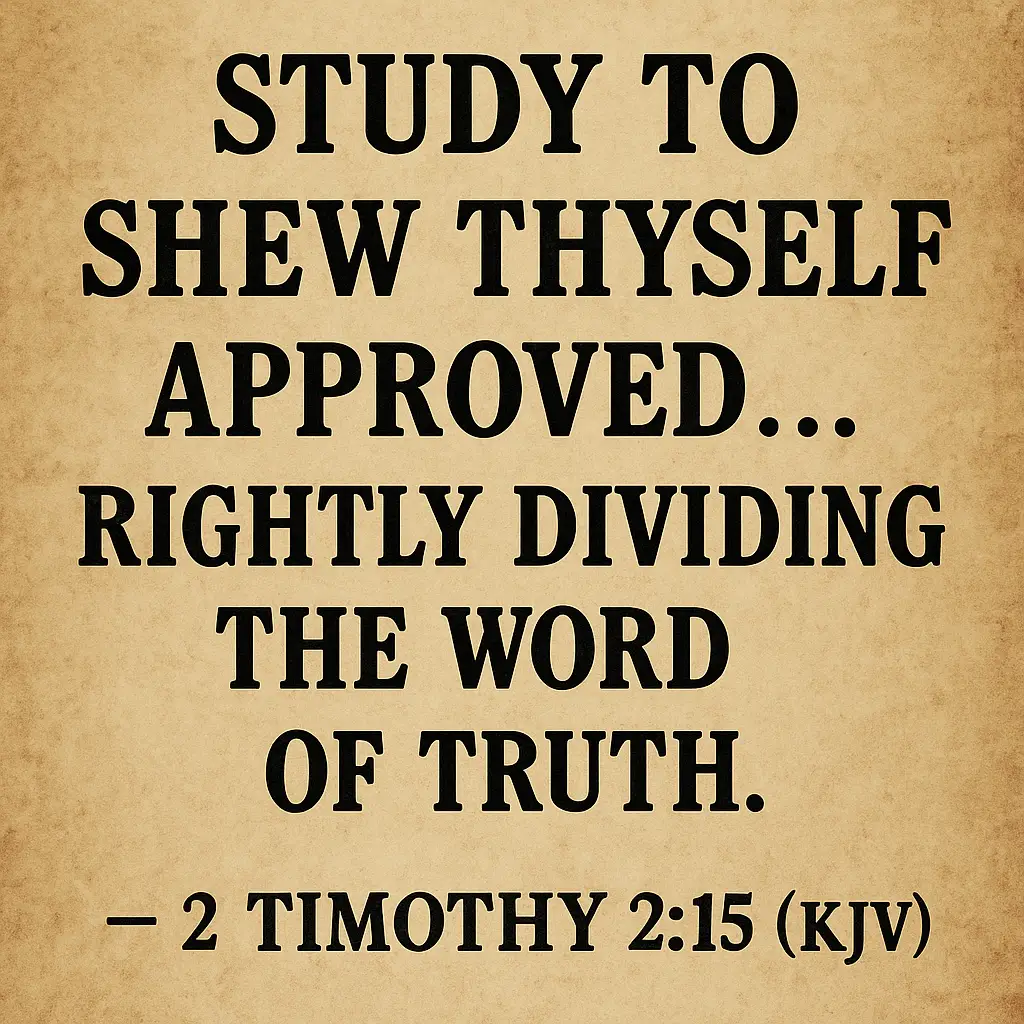
That verse is 2 Timothy 2:15:
Study to shew thyself approved unto God, a workman that needeth not to be ashamed, rightly dividing the word of truth.
Yet, in over 100 modern Bible versions, this command has vanished. Not translated differently—vanished. Replaced by phrases like “do your best,” “be diligent,” or simply omitted altogether. But why? And what does it cost the believer?
What We Lose When We Lose This Verse
This verse is not only a command, it’s a blueprint. It tells the believer what to do—study—and how to do it—rightly divide the word of truth. It is the cornerstone of sound doctrine and discernment.
Removing it undermines the foundation for:
- Serious Bible study
- Scriptural discernment
- The method of comparing scripture with scripture
- Understanding dispensations, covenants, and spiritual principles
The omission isn’t just textual—it’s theological.
A Curious Disappearance
For 380+ years, every edition of the Authorized Version included 2 Timothy 2:15 with the word “study.” Suddenly, in the late 20th century, even versions that claim KJV heritage (like the NKJV) dropped it. No Bible today outside of the KJV commands believers to study the Word.
Why?
Modern scholarship seems less concerned with preserving God’s words and more with publishing palatable paraphrases. Words like “study” and “rightly divide” are too precise for their fluid theology.
The question must be asked: Who benefits when Christians no longer feel commanded to study deeply and divide truth rightly?
Rightly Dividing: The Forgotten Method
To rightly divide is to separate. To discern. To distinguish law from grace, Israel from the Church, and truth from error. It is the Holy Spirit’s prescribed method for study.
But modern Bibles prefer integration over division, synthesis over separation. They resist distinctions. This loss of spiritual separation is not accidental—it’s the fruit of compromise.
A Workman or a Drifter?
The original verse creates urgency. It says the one who studies and rightly divides will be “approved unto God.” The one who doesn’t will “be ashamed.”
Modern versions remove both the mandate and the method. They remove the word “study,” the approval of God, and the charge to rightly divide. What’s left is a general encouragement with no teeth.
The Real Issue: Authority
This isn’t just about one verse. It’s about whether we submit to a Bible that has not changed with the times—or one that adapts to man’s preferences.
Only one Bible has preserved the command to study, the method to do it, and the warning of what happens if we don’t.
If you’re serious about knowing God’s truth, ask yourself:
Do I want a Bible that tells me plainly what to do, or one that leaves me to figure it out on my own?
Conclusion: The Workman Still Needed
The call to study and rightly divide the Word is not optional. It’s essential to spiritual growth, discernment, and approval before God.
And it’s only preserved in the King James Bible.
Don’t be ashamed of using the Bible that hasn’t drifted with the times. Be a workman. Study. Divide rightly. And walk in the truth.
“Thy word is truth.” (John 17:17)