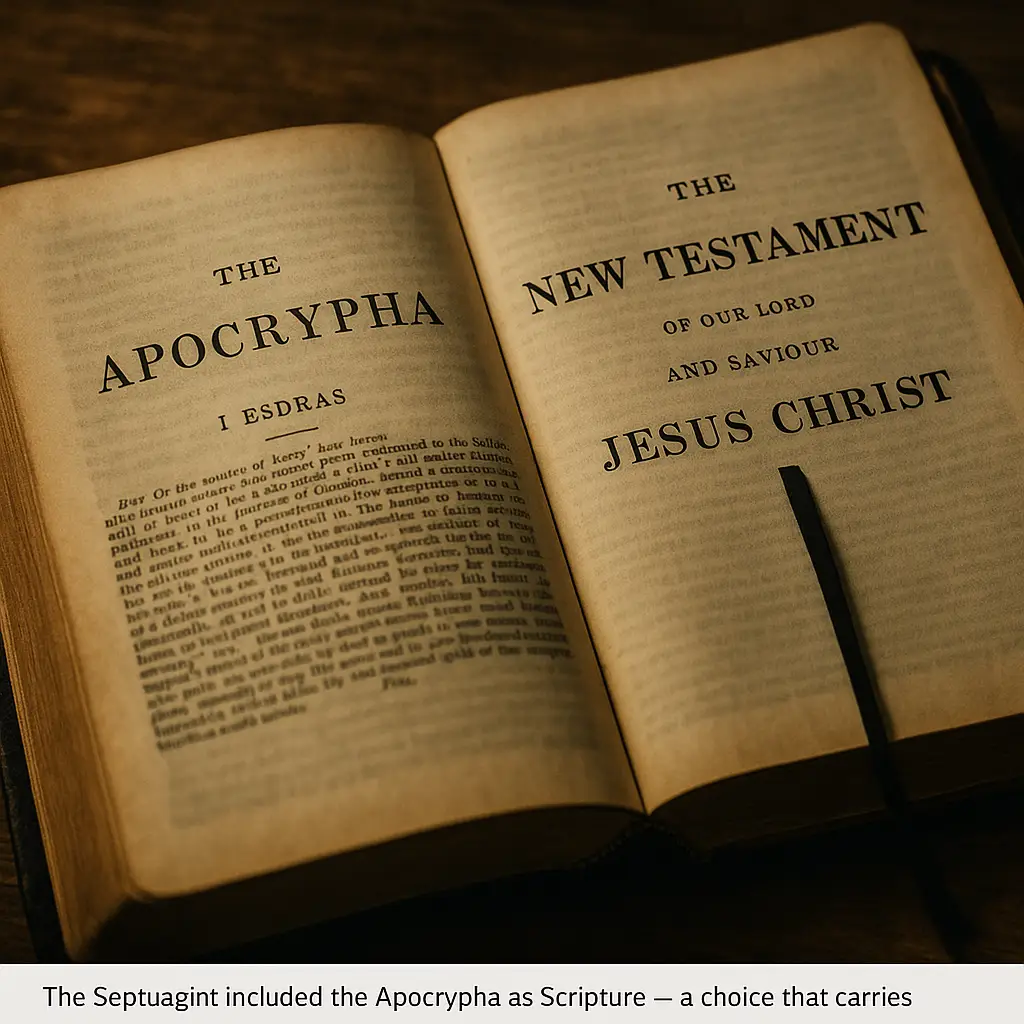
One of the most spiritually dangerous aspects of the Septuagint is its inclusion of the Apocrypha — a group of writings that were never part of the Hebrew canon and were never affirmed by Christ or the apostles. By accepting these books as Scripture, the Septuagint opens the door to doctrines that contradict the gospel of grace and introduce spiritual confusion.
1. What Is the Apocrypha?
The Apocrypha refers to a collection of books written during the intertestamental period — including Tobit, Judith, Wisdom of Solomon, Ecclesiasticus (Sirach), Baruch, and 1 & 2 Maccabees. These books appear in Septuagint manuscripts but are completely absent from the Hebrew Masoretic Text.
Jesus never quoted from the Apocrypha. Neither did the apostles. The early church was divided on their use, and the Jewish people universally rejected them as inspired Scripture.
2. Doctrines Introduced by the Apocrypha
These books promote dangerous teachings foreign to the rest of Scripture, including:
• Purgatory – 2 Maccabees 12:45 speaks of offering prayers for the dead, implying purification after death.
• Salvation by Works – Tobit 12:9 claims, ‘alms doth deliver from death, and shall purge away all sin.’
• Magic and Deception – Tobit instructs the use of a fish’s liver and heart to drive away demons.
• Lying Justified – Judith uses deception to achieve her goals, yet is praised.
3. Why the King James Bible Rejected the Apocrypha
The King James translators placed the Apocrypha between the Old and New Testaments — not because they considered it Scripture, but for historical reference only. The translators clearly stated it was not to be regarded as inspired, nor used to establish doctrine.
This separation affirms the Reformation principle of *sola Scriptura* — that only the canonical books of the Old and New Testaments are authoritative for faith and practice.
4. The Septuagint and Doctrinal Compromise
The inclusion of the Apocrypha in the Septuagint opened the door for the Roman Catholic Church to canonize these books at the Council of Trent in 1546 — in part to defend doctrines like purgatory and works-based righteousness.
Modern Bible versions that rely on the Septuagint risk echoing the same drift. The King James Bible stands apart by protecting the purity of the gospel and the integrity of doctrine.
Conclusion
God’s Word is pure — and it must remain unmixed. By rejecting the Apocrypha, the King James Bible guards the flock from doctrinal error and spiritual confusion. The Septuagint’s inclusion of these uninspired writings reveals a serious breach in trust. Let us hold fast to the preserved Word that is able to make us wise unto salvation.