Series: Hard Questions, Holy Answers — Post 5
Scripture reference:
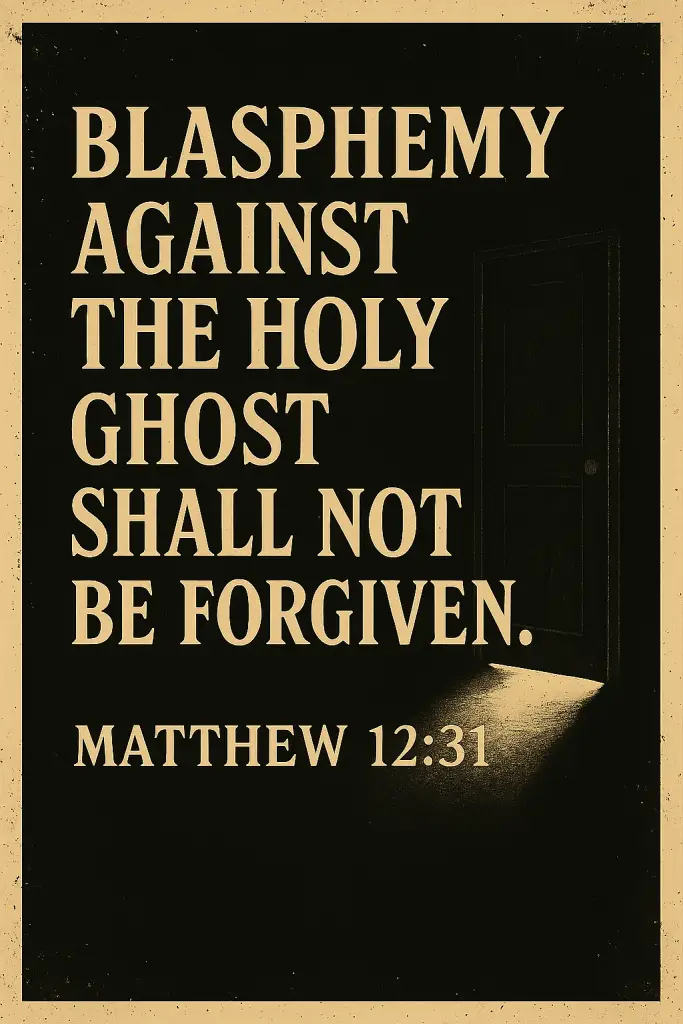
“Wherefore I say unto you, All manner of sin and blasphemy shall be forgiven unto men: but the blasphemy against the Holy Ghost shall not be forgiven unto men.” Matthew 12:31 (KJV)
1. What Did Jesus Mean by “Blasphemy Against the Holy Ghost”?
The unpardonable sin—blasphemy against the Holy Ghost—was spoken in the context of the Pharisees accusing Jesus of casting out devils “by Beelzebub” (Matthew 12:24). Christ was not merely performing miracles; He was doing so by the Spirit of God as the very fulfillment of Messianic prophecy. The Pharisees saw this, knew it, and still knowingly called the work of the Holy Spirit satanic.
This wasn’t casual ignorance. It was willful, hardened rejection of divine revelation—the deliberate twisting of the truth to resist and destroy the witness of God’s Spirit.
2. Is It Still Possible to Commit That Sin Today?
Jesus’ words were rooted in a historical event, but the principle still holds: to blaspheme the Holy Ghost is not merely to say irreverent words—it’s to utterly and knowingly reject the Holy Spirit’s witness of Christ.
And that is still possible today—but not in the exact form the Pharisees did. People today don’t see Christ in the flesh and attribute His miracles to Satan. But they do resist the Holy Spirit when He convicts them of sin, righteousness, and judgment (John 16:8).
The unpardonable sin is not just rejecting Christ once—it is a settled, final rejection of the Spirit’s testimony of the Son, dying in unbelief, having trampled underfoot the grace of God.
3. Why Is This Sin “Unforgivable”?
It’s not because God is unwilling to forgive it.
It’s because this sin rejects the only One who can forgive.
“There remaineth no more sacrifice for sins.” — Hebrews 10:26
When someone rejects the Holy Spirit’s drawing, the truth about Christ, and the only blood that can cleanse sin, there remains nothing else to turn to. It is unpardonable because it shuts the door on the only door that saves.
4. Can a Believer Commit the Unpardonable Sin?
No. If you’re worried that you’ve committed it—you haven’t.
Conviction, sorrow over sin, and desire for Christ are evidence of the Holy Spirit’s work in you.
The ones who are in danger are not the ones who fear they’ve grieved God, but the ones who harden their hearts and refuse to hear Him at all.
5. A Word of Comfort for the Fearful
No one accidentally commits the unpardonable sin.
It is not a passing doubt or even a rebellious season. It is a final, deliberate, hardened rejection of the Spirit’s witness of Christ until death. If you have breath in your lungs and a desire to know God, there is still grace for you.
“Him that cometh to me I will in no wise cast out.” — John 6:37
In Summary:
- Blasphemy against the Holy Ghost is a willful, final rejection of the Spirit’s testimony that Jesus is the Christ.
- It is unpardonable because it denies the only provision for forgiveness—Christ.
- It cannot be committed accidentally.
- Anyone who wants to be forgiven has not committed it—the door is still open.
- Believers sealed by the Holy Spirit cannot commit this sin (Ephesians 4:30).