Understanding How the Bible Reveals the Divine Nature of Christ
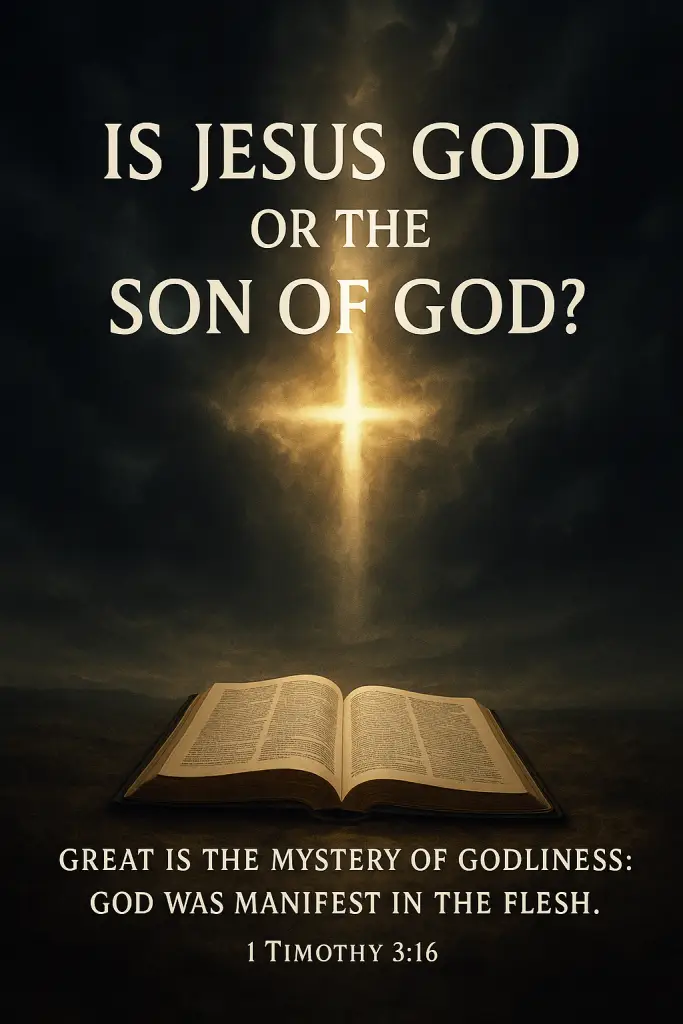
This is one of the most important questions anyone can ask: Is Jesus God, or is He the Son of God? At first glance, those two titles may seem like they contradict — but Scripture shows they are not only compatible, they are inseparable. To know Jesus rightly is to know who He truly is: not just a good teacher or prophet, but God manifested in the flesh and the only begotten Son of the Father. Let’s walk through the Bible together and see the glorious truth of who Jesus really is.
Jesus Is Called God in Scripture
Many verses plainly declare that Jesus is God:
“In the beginning was the Word, and the Word was with God, and the Word was God… And the Word was made flesh.” (John 1:1,14)
“Unto the Son he saith, Thy throne, O God, is for ever and ever.” (Hebrews 1:8)
“Looking for… the glorious appearing of the great God and our Saviour Jesus Christ.” (Titus 2:13)
Jesus is not a created being. He is eternal, divine, and one with the Father.
Jesus Is the Son of God — Not a Lesser Being
Jesus is also the Son of God, a title that expresses His unique relationship with the Father. He is the only begotten, sent from heaven, born of a virgin, and filled with the Holy Spirit without measure.
“And the angel… said unto her… that holy thing which shall be born of thee shall be called the Son of God.”
(Luke 1:35)
“God so loved the world, that he gave his only begotten Son…” (John 3:16)
But notice: when Jesus called God His Father, He was claiming equality with God:
“Therefore the Jews sought… to kill him, because he… said also that God was his Father, making himself equal with God.” (John 5:18)
To be the Son of God is not to be a subordinate god — it is to share in the very nature and essence of God Himself.
One With the Father, Yet Distinct
The Bible reveals a divine mystery: Jesus and the Father are one, yet they are distinct persons. This isn’t contradiction — it is revelation.
“I and my Father are one.” (John 10:30)
“He that hath seen me hath seen the Father.” (John 14:9)
At the same time, Jesus voluntarily humbled Himself in His earthly ministry:
“My Father is greater than I.” (John 14:28)
“Who… being in the form of God… humbled himself.” (Philippians 2:6–8)
He never ceased to be God. He laid aside His divine privilege to serve and save.
The Trinity: One God, Three Persons
The Bible teaches that there is one God, revealed in three persons — Father, Son, and Holy Ghost.
“Go ye therefore… baptizing them in the name of the Father, and of the Son, and of the Holy Ghost.”
(Matthew 28:19)
“There are three that bear record in heaven, the Father, the Word, and the Holy Ghost: and these three are one.” (1 John 5:7)
This is not philosophy or church tradition — it is the witness of Scripture. Jesus is fully God, just as the Father and Spirit are fully God.
Why This Truth Is Important
If Jesus is not God, He cannot save you.
Only God can forgive sin (Mark 2:7). Only a perfect, sinless sacrifice could bear the sin of the world. And only God could defeat death and rise again.
Jesus said:
“If ye believe not that I am he, ye shall die in your sins.” (John 8:24)
“Great is the mystery of godliness: God was manifest in the flesh…” (1 Timothy 3:16)
To deny His deity is to deny the heart of the Gospel.
Conclusion: Jesus Is Both
Jesus is God, and He is the Son of God — both titles are true. He is the eternal Word, the Lamb slain, the Risen Lord, and the coming King. He is worthy of your worship, your trust, and your life.
If you’ve been getting closer to God and reading your Bible more, that is no accident. It is His Spirit drawing you to know the truth — and the truth is a Person:
“I am the way, the truth, and the life: no man cometh unto the Father, but by me.” (John 14:6)
Overcomer’s Checkpoint
- Do you know Jesus as both your Savior and your Lord?
- Are you willing to bow before Him not only as a teacher, but as God?
- Have you confessed with your mouth that Jesus Christ is Lord, and believed in your heart that God raised Him from the dead?
“That at the name of Jesus every knee should bow… and every tongue should confess that Jesus Christ is Lord…” (Philippians 2:10–11)
I came seeking a clear answer.
I did not seek word salad. “The Bible reveals a divine mystery: Jesus and the Father are one, yet they are distinct persons.”
“Jesus Is the Son of God — Not a Lesser Being”
Jesus said “you should be glad that I am returning to the Father for He is greater than I”
So for clarity sake if one believes that Jesus is the Son of God but not that Jesus is God in flesh (yes I know both are true – focus)
is that person saved?
Thank you for the honest comment. I understand the frustration, because people often answer this question with philosophical language instead of plain biblical clarity.
The issue is not whether someone can perfectly explain the mystery of the Trinity. None of us can fully explain the infinite nature of God.
The real issue is: who is Jesus?
The Bible teaches two truths at the same time:
Jesus is truly the Son of God.
Jesus is also God manifested in the flesh.
Those truths are not contradictions. They are the biblical revelation concerning Christ.
When Jesus said, “my Father is greater than I” (John 14:28), He was speaking from the position He willingly took in His incarnation and earthly humiliation. Scripture also says:
“And without controversy great is the mystery of godliness: God was manifest in the flesh…” (1 Timothy 3:16)
Thomas directly called Him:
“My Lord and my God.” (John 20:28)
And Isaiah prophesied of the Son:
“His name shall be called… The mighty God.” (Isaiah 9:6)
So the question of salvation is important.
Can a person be saved while still lacking full theological precision? Yes. Many new believers understand imperfectly.
But if someone knowingly rejects the biblical revelation that Jesus is divine — reducing Him to merely a created being, lesser god, or exalted creature — then they are rejecting the true Christ revealed in Scripture.
Why is this important?
Because only God can save.
A merely created savior cannot bear the sins of the world, conquer death, or give eternal life.
This is why John warned so strongly about false views of Christ. The center of saving faith is not merely saying “Jesus is the Son of God” while redefining what that means. Even cults use that language. The question is whether we believe what Scripture means by it.
The Son is distinct from the Father, yet shares the very nature of God. Not a second god. Not a lesser being. God manifested in flesh.
That is why Christians historically confess both:
Jesus is the Son of God,
and
Jesus is Lord.