Psalm 136 is a song of triumph.
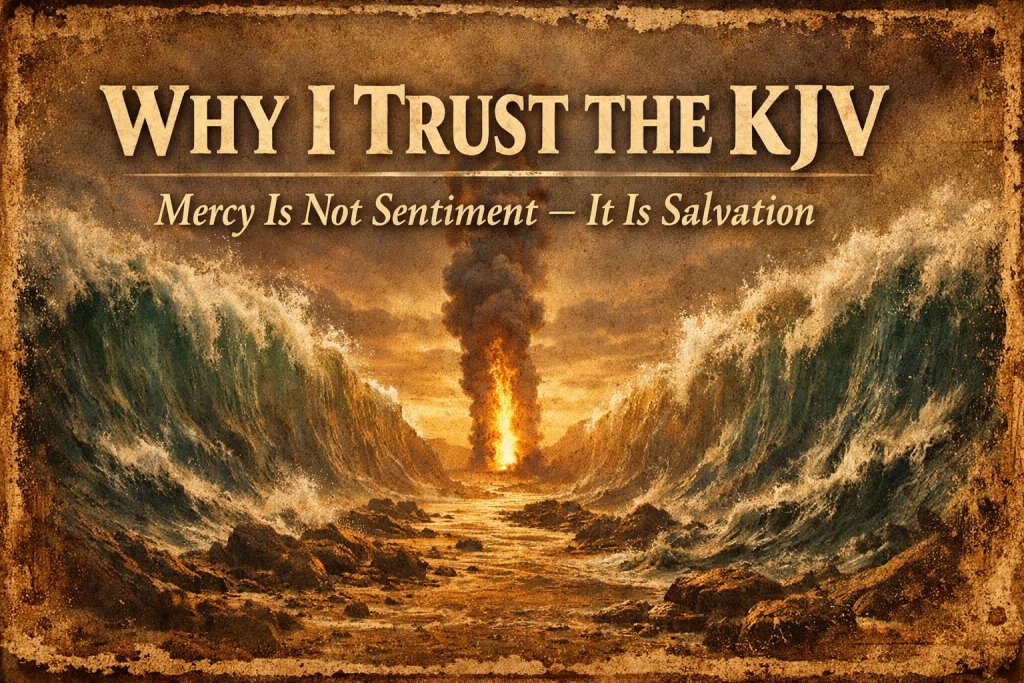
Not therapy. Not sentiment. Triumph.
From the Red Sea to Pharaoh, from Sihon to Og, from wilderness to inheritance — Israel is rehearsing the mighty acts of God. The refrain that seals every victory is the same:
“His mercy endureth for ever.” (Psalm 136, KJV)
This is not the language of spiritual introspection. It is the confession of a people spared, redeemed, and carried through judgment by the covenant God who has mercy on whom He will have mercy.
Mercy Is Not a Feeling — It Is Deliverance
Modern translations often replace mercy with steadfast love or similar phrases:
ESV: “for his steadfast love endures forever.”
Sounds harmless. Even poetic. But poetry without theology is just sentiment. Steadfast love is an attribute; mercy is an act. Love may observe; mercy intervenes. Love may feel; mercy rescues. Mercy has Pharaoh drowned and Israel singing on the other side of the sea.
The shift is subtle, but deadly. It relocates the center of gravity from covenant blood and judicial deliverance to emotional affection. It flattens the battlefield, quiets the clash of kingdoms, and softens the triumphant note of salvation.
Psalm 136 is the Old Testament gospel in miniature. A people in bondage, a war with a tyrant, a Passover lamb, a deliverance through water, a wilderness pilgrimage, a conquest, and an inheritance — and over all of it: mercy.
Swap mercy for emotion and the story changes.
Soft Words Make Soft Doctrines
This is the deeper issue.
Modern Bible philosophy keeps making God relatable and therapeutic. The KJV keeps Him holy, sovereign, and triumphant. The Authorized Version speaks to battle-tested saints; modern versions speak to anxious consumers.
Consider the broader trend:
- sin → brokenness
- hell → realm of the dead
- flesh → human desires
- justification → being made right
- propitiation → sacrifice
- blood → death
- mercy → steadfast love
Each change appears small, but together they remake Christianity into something it was never meant to be — a religion without offense, a gospel without blood, and a God without awe.
It dulls the sword. It blunts the spear. It takes the battlefield out of the Bible.
No wonder so many Christians today cannot make war in the Spirit. They have never heard the Bible speak as a battle book.
Mercy Is What Pharaoh Fears
Mercy is not mere kindness. Mercy is God sparing the guilty and overthrowing the proud. Mercy is dangerous to Pharaoh and life to Israel. Mercy is triumph for the covenant people and judgment on the enemies of God.
Modern translations neutralize that distinction because modern Christianity has lost the courage to confess it. The KJV preserves it because the Bible itself preserves it.
Why I Trust the KJV
I trust the King James Bible because it preserves the sharpness, weight, and battle of Scripture. It speaks with the gravity of Sinai and the triumph of the Cross.
The Authorized Version refuses to recast Scripture as therapy for the self. It refuses to sand down the corners or negotiate away the majesty of God. It keeps the altar, the blood, the law, the gospel, the inheritance, and the throne intact.
And in Psalm 136, it keeps mercy — not as sentiment, but as salvation:
“For his mercy endureth for ever.”
Let the saints say Amen.