When God Says “No” and Grace Says “Still”
Series — Refined by Fire: Walking Through Suffering with Christ — Post 4
“And he said unto me, My grace is sufficient for thee: for my strength is made perfect in weakness.”
— 2 Corinthians 12:9 (KJV)
Introduction
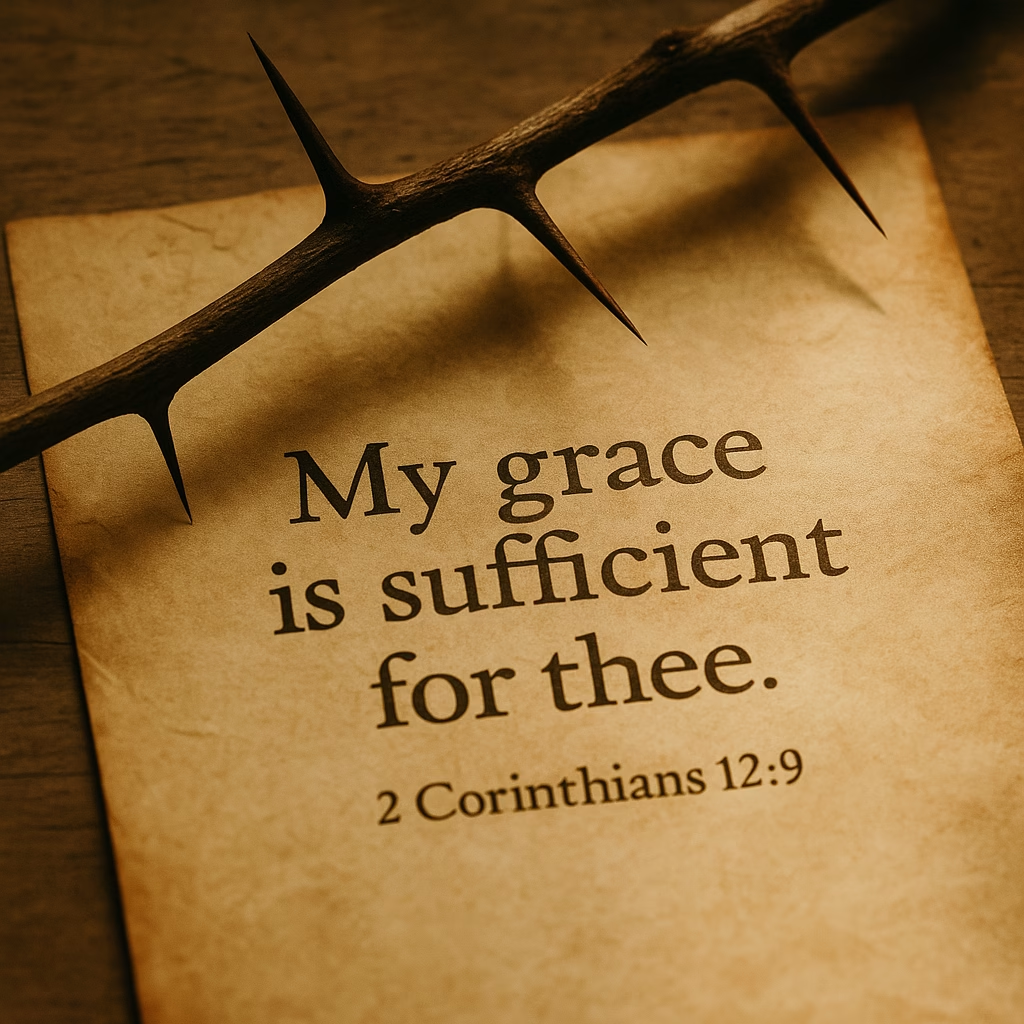
There are prayers God answers with miracles. There are prayers He answers with silence. But sometimes, God answers with something greater than either — grace.
Paul, who saw the dead raised and demons flee, also knew what it meant to plead with God three times for relief — and hear a divine “No.” But behind that “No” was a “Yes” to something deeper. Not removal, but revelation. Not escape, but empowerment. Not healing, but holiness.
What Was Paul’s Thorn?
Scripture never specifies what Paul’s thorn in the flesh was. Some believe it was physical sickness, others emotional torment, or spiritual oppression. But the Spirit deliberately left it unnamed — because it is not the thorn that matters most, but what the thorn does.
It humbles. It weakens. It exposes our frailty. And it becomes the soil where grace grows strongest.
Why God Sometimes Says “No”
God does not delight in watching His children suffer — but He does delight in forming Christ in us. Paul said the thorn was given “lest I should be exalted above measure” (2 Corinthians 12:7). The thorn was not an accident — it was an assignment.
Sometimes God allows the thing that weakens us because it’s the only thing that will kill our pride. He will say “No” to healing if it protects us from spiritual harm. He will say “No” to promotion if it would distract us from intimacy. What feels like divine denial may actually be divine protection.
God’s “No” Is Not a Rejection
We often pray for God to take things away—pain, weakness, opposition, hardship. And sometimes He does. But when He doesn’t, we must remember: God’s refusal is not His rejection.
The apostle Paul, who had seen visions of the third heaven and carried the gospel across continents, found himself in a place of pleading. Not once, not twice, but thrice he besought the Lord to remove what he called a “thorn in the flesh.” And the answer came—not in removal, but in revelation: “My grace is sufficient for thee.”
Paul didn’t get what he wanted. He got something better—the strengthening grace of Christ Himself.
God Still Uses the Thorns
Your thorn may be illness, emotional grief, family pain, mental anguish, or spiritual oppression. You’ve asked the Lord to take it away—and maybe He hasn’t. Not because He doesn’t love you. But because He is refining something eternal within you.
This is how the Overcomer is formed—not by the absence of pain, but by walking through it with Christ’s grace as strength.
“Most gladly therefore will I rather glory in my infirmities, that the power of Christ may rest upon me.” (2 Corinthians 12:9)
Paul stopped resisting the thorn—and started rejoicing in it. That’s how powerful grace is. It flips suffering into strength. Not the strength of the flesh, but the strength of Christ in us.
Lessons from Biblical Sufferers
Paul wasn’t the only one God said “no” to.
- Job was not given an answer in his affliction—he was given a deeper vision of God.
- Moses was told he could not enter the Promised Land—but he was still called faithful.
- David prayed for his infant son’s life—but God took him, and David worshiped.
These were not signs of God’s neglect. They were moments of divine wisdom shaping eternal glory.
God’s silence in your request may be a louder “yes” to something better. A yes to spiritual depth, to a ministry of comfort, to a clearer view of Christ.Grace That Is Sufficient
Grace That Is Sufficient
The Lord said to Paul, “My grace is sufficient for thee: for my strength is made perfect in weakness.”
This is not poetic filler. This is eternal truth. God’s grace is not just a comfort — it is a supply. It meets the need precisely where the thorn digs deepest. His strength is not for the strong — it flows best through weakness.
Paul didn’t just accept God’s answer — he rejoiced in it: “Most gladly therefore will I rather glory in my infirmities, that the power of Christ may rest upon me.” (2 Corinthians 12:9)
When Grace Is Greater Than Healing
God’s goal is not to pamper our flesh, but to perfect our faith. And sometimes, the most spiritual thing He can do is not remove the thing we think we can’t bear.
The thorn doesn’t mean we are disqualified. It doesn’t mean we lack faith. It means we are human — and God is sovereign. If He says “My grace is sufficient,” then there is no better outcome. His “No” is still good. His “No” is still love. His “No” is still victory.
When Grace Says “Still”
God’s grace does not always remove the storm—but it anchors you through it. When you wake up with the thorn still in your flesh, hear His whisper: “My grace is sufficient for thee.”
And if you must carry the thorn a little longer, know this:
- He is shaping you.
- He is keeping you.
- He is glorifying His Son through your endurance.
The cross came before the crown for Christ. It will be the same for you. But His grace is enough to walk it.
Conclusion
You may be carrying something today that you’ve begged God to remove. And maybe He hasn’t. But if His grace has come instead — hold to it. Lean on it. Live by it.
The thorn will not last forever. But the strength you gain through it will. God will not always change your circumstance — but He will change you through it.
And on the other side of the thorn, there will be power — the kind that rests upon you when the flesh is fully surrendered.
Overcomer’s Checkpoint
- What thorn has God not removed, though you’ve prayed?
- Have you seen His strength made perfect in your weakness?
- Is there something He’s producing in you that couldn’t come any other way?
- Am I resenting a “thorn” that God may have allowed for my refinement?
- Have I received the Lord’s grace in my weakness, or am I still resisting it?
- Do I believe His “No” is sometimes a better “Yes” for my soul?