Defined by God, Not by Men
✒️ Introduction
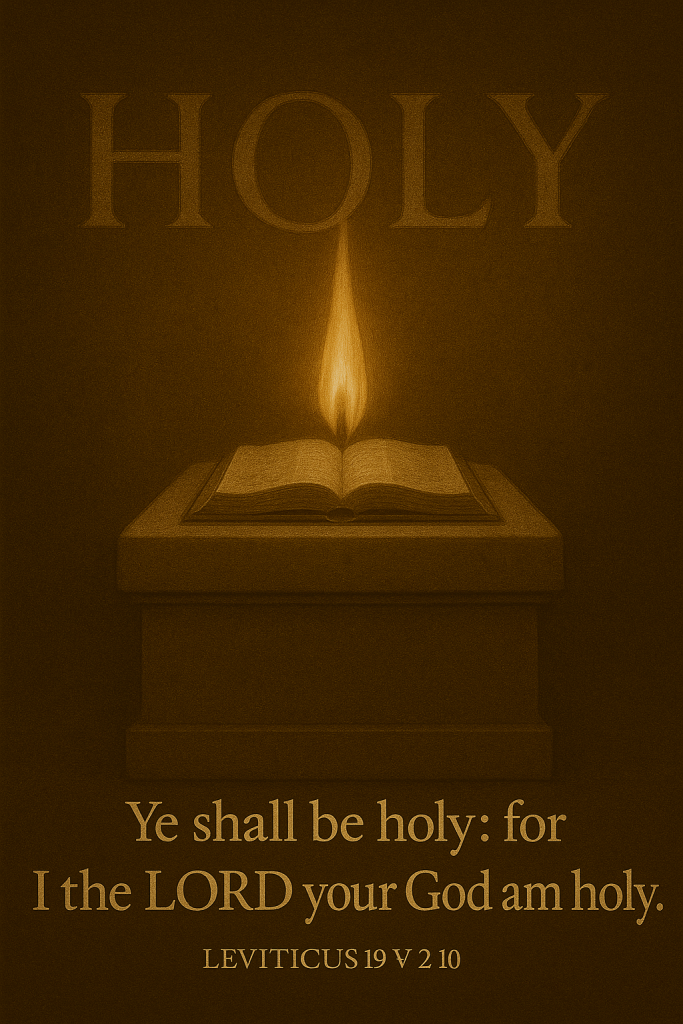
“Speak unto all the congregation of the children of Israel, and say unto them, Ye shall be holy: for I the Lord your God am holy.”
— Leviticus 19:2 (KJV)
The word holy is central to Scripture — it describes God Himself, His people, His Word, and His purpose. But what does it mean?
In today’s world, holy is often reduced to “religious” or “good,” while modern Bibles frequently remove it altogether in key places. But in the King James Bible, holy retains its full force. And through repeated use, contrast, and divine pattern, the Word of God defines it — not as bland moralism, but as something set apart by God and filled with God.
🔰 First Use: The Ground Where God Stands
“Put off thy shoes from off thy feet, for the place whereon thou standest is holy ground.”
— Exodus 3:5
Here we see something holy — not because of what it is, but because God is there. Holiness is not about the material, but about the presence. That patch of dirt became holy because God’s glory was present and His voice was heard.
🕊️ Defined by Association with God
“Ye shall be holy: for I am holy.”
— Leviticus 11:44
“That ye may be a peculiar people, a holy nation…”
— Exodus 19:6
Holiness is not a human trait — it is a divine imprint. To be holy is to be set apart for God’s use, aligned with His character, and separated from the profane and common.
📖 Clarified by Contrast
“They have put no difference between the holy and profane, neither have they shewed difference between the unclean and the clean…”
— Ezekiel 22:26
Holiness involves distinction. It is not vague or inclusive of everything. It draws lines between what is acceptable and what is not — what belongs to God, and what does not.
“Be ye holy in all manner of conversation; Because it is written, Be ye holy; for I am holy.”
— 1 Peter 1:15–16
Even our speech, conduct, and daily walk are to reflect God’s separateness. Holiness is not religious appearance — it is God’s presence shaping our lives.
✨ Holy Things, Holy People, Holy Words
The KJV consistently preserves this word across all contexts:
- Holy men of God (2 Peter 1:21)
- Holy Scriptures (Romans 1:2)
- Holy angels (Luke 9:26)
- Holy Ghost (90+ times — retained where many versions remove it)
The repetition builds the understanding: what is holy is God’s, and is to be treated with reverence and care.
❌ Modern Versions Remove the Word
Modern Bibles often omit “holy” in critical places:
- “Holy men of God” becomes simply “men”
- “Holy Scriptures” becomes “the Scriptures”
- “Holy Ghost” becomes “Spirit” or “spirit”
This loss is not neutral. It removes the sacred distinction and obscures the Spirit-filled nature of God’s Word and servants. The KJV preserves it — and lets the reader be taught by it.
✍️ Summary: What Does “Holy” Mean?
According to the King James Bible, holy means:
- Set apart by God and for God
- Filled with or belonging to the presence of God
- Opposite of common or profane
- Marked by reverence, distinction, and spiritual purpose
Holiness is not man-made. It is a reality revealed through the Word — and it begins with God.