The Meaning of a Blood Covenant
There are many types of covenants in the Bible, but only one everlasting covenant promises eternal life—and it is a blood covenant. While many Christians have heard the term, few grasp its true meaning or weight. For years, I didn’t either. But understanding the seriousness of a blood covenant is essential to grasping who God is to us, who we are to Him, and how we are to walk before Him.
In Scripture, a covenant is more than a contract. It is a bond in blood, sealed and witnessed by Almighty God. The Hebrew word for covenant literally means “to cut.” This concept comes to life in Genesis 15, where we are given a profound glimpse into the gravity of God’s covenant with Abraham.
The Covenant with Abram: A Walk of Death
In Genesis 15, God promises Abraham protection, provision, descendants as numerous as the stars, and a homeland for his seed. Abraham believes God, and it is counted to him as righteousness (Genesis 15:6). But when Abraham asks for confirmation, God does not respond with mere words—He instructs Abraham to prepare animals for sacrifice and to cut them in half (Genesis 15:9-10).
This act was not foreign to Abraham. In the ancient world, this was how covenants were cut: the dismembered carcasses formed a path, and the covenant parties would walk between them—often in a figure-eight pattern—a symbol of unending commitment and covenant permanence.*
While Scripture does not specify the exact shape of the walk, ancient covenant rituals often involved a looping or figure-eight path between the divided pieces, signifying a perpetual bond. The emphasis was on mutual death to independence and a binding to one another forever.
This was a walk of death, symbolizing total commitment. The message was clear: “If I break this covenant, let me become as these slain animals.”
A blood covenant involved a complete exchange of lives:
- All assets, liabilities, and enemies were shared.
- Each participant died to independent living.
- From that point on, they lived for one another.
In Genesis 15:17, God appears as a smoking furnace and a burning lamp and walks through the pieces alone, while Abraham is put into a deep sleep. This signifies that God Himself would fulfill both sides of the covenant—His part and Abraham’s. This was not just a promise; it was a guarantee sealed in blood.
“On the same day the Lord made a covenant with Abram.” (Genesis 15:18)
Isaac: A Foreshadowing of Christ’s Covenant Sacrifice
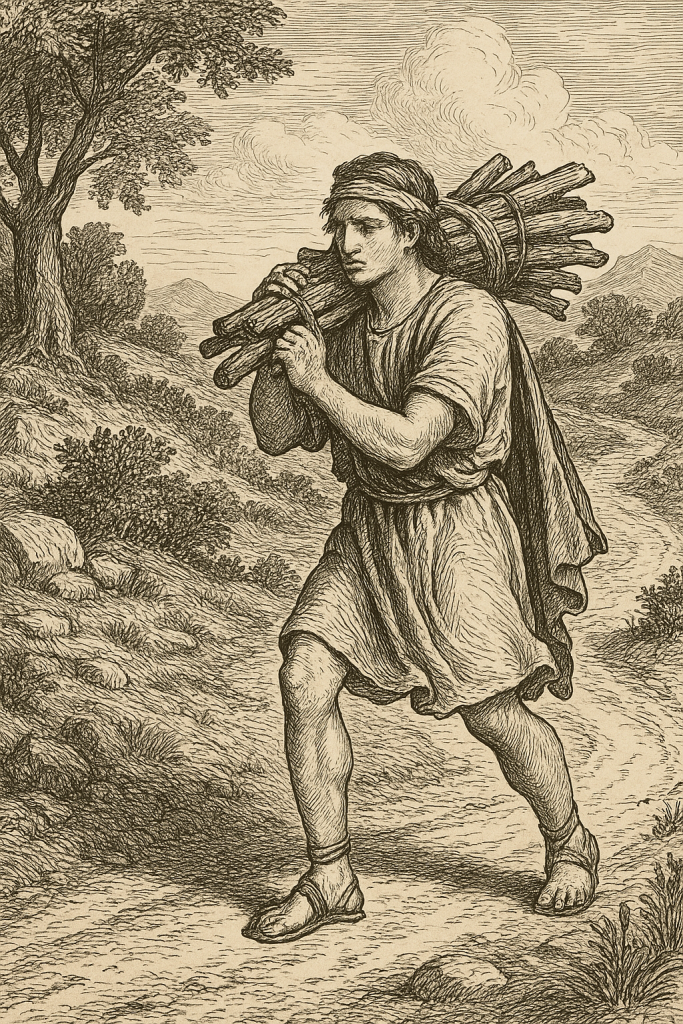
Later, in Genesis 22, the covenant theme continues. Abraham is tested and asked to offer up his beloved son, Isaac. As they journey to Mount Moriah, Isaac carries the wood for the offering upon his shoulders (Genesis 22:6).
This moment is a foreshadowing of Christ: just as Isaac carried the wood, Jesus carried His cross to the hill of sacrifice. But while Isaac was spared, Jesus was not. He became the Lamb provided by God (Genesis 22:8), fulfilling the covenant requirement once and for all.
“He that spared not his own Son, but delivered him up for us all…” (Romans 8:32)
Why Isaac Was Spared — and Why We Are, Too
Isaac’s sparing highlights a deeper truth: no fallen man is an acceptable sacrifice before God. God requires a holy, blameless, spotless Lamb. No matter how moral, sincere, or disciplined a person may be, our righteousness falls short.
“But we are all as an unclean thing, and all our righteousnesses are as filthy rags…” (Isaiah 64:6)
Even our best works are tainted by pride, self-preservation, or fleshly motives. True righteousness flows only from a redeemed heart — a heart transformed by Christ and the Spirit.
“Not by works of righteousness which we have done, but according to his mercy he saved us…” (Titus 3:5)
“Knowing that a man is not justified by the works of the law, but by the faith of Jesus Christ…” (Galatians 2:16)
When we believe in Christ’s finished work, we receive a new heart and become acceptable before God. Not because of what we do, but because of what Christ has done.
“For by one offering he hath perfected for ever them that are sanctified.” (Hebrews 10:14)
The Exchange of Covenant: Assets, Liabilities, and Enemies
God took on all of Abraham’s liabilities and weaknesses and pledged to fight his enemies. In return, Abraham’s life now belonged wholly to God. This is the nature of the covenant:
- God becomes our shield and reward (Genesis 15:1).
- Our enemies become His enemies.
- Our debts are met by His grace.
- Our weakness is met with His strength.
“And he said unto me, My grace is sufficient for thee: for my strength is made perfect in weakness.” (2 Corinthians 12:9)
“I can do all things through Christ which strengtheneth me.” (Philippians 4:13)
“He giveth power to the faint; and to them that have no might he increaseth strength.” (Isaiah 40:29)
Our Response: Death to Self
Covenant is not casual. It is a walk of death. When we enter into covenant with God through Christ, we surrender all. Our possessions, our will, our reputation, our future — all become His.
“I am crucified with Christ: nevertheless I live; yet not I, but Christ liveth in me…” (Galatians 2:20)
We are called to actively oppose His enemies: the world, the flesh, and the devil. We do not battle for victory; we battle from it, because we belong to a covenant-keeping God.
“This people have I formed for myself; they shall shew forth my praise.” (Isaiah 43:21)
Covenant and New Identity
In Genesis 17, after God establishes His covenant, He changes Abram’s name to Abraham. This is not cosmetic. In Hebrew, the “ah” sound reflects the breath of God. It’s a sign of divine impartation.
God placed His own name into Abraham’s.
Likewise, He changed Sarai to Sarah, breathing into her destiny.
Today, God places His Spirit into every believer. He gives a new name, a new heart, and a new identity to those who walk in covenant with Him.
“And I will give them one heart, and I will put a new spirit within you…” (Ezekiel 11:19)
The Everlasting Covenant Fulfilled in Christ
God’s covenant with Abraham was never meant to stop with blood-stained animals. It pointed forward to Christ, the Lamb slain from the foundation of the world.
“Now to Abraham and his seed were the promises made… and to thy seed, which is Christ.” (Galatians 3:16)
“And if ye be Christ’s, then are ye Abraham’s seed, and heirs according to the promise.” (Galatians 3:29)
Jesus walked the walk of death between the pieces. He is both the sacrifice and the mediator. He fulfilled the covenant on our behalf and invites us into it by faith.
“By so much was Jesus made a surety of a better testament.” (Hebrews 7:22)
This is the everlasting covenant (Genesis 17:7) — fulfilled, secured, and sealed in the blood of Christ.
Conclusion: Living in the Power of the Covenant
We are not saved by performance. We are saved by covenant. A covenant initiated by God, fulfilled by Christ, and entered into by faith.
To walk in covenant is to live a life of surrender, obedience, and joy. It is to know that our liabilities are covered, our enemies are defeated, and our future is secure. It is to walk in the victory and intimacy that only a bond in blood can provide.
“Now the God of peace, that brought again from the dead our Lord Jesus… through the blood of the everlasting covenant, make you perfect in every good work to do his will.” (Hebrews 13:20-21)
Reviving message of God’s love.
Thank you, Godwin. I’m grateful the Lord used the article to encourage you. May we all continue to grow in the knowledge of His unfailing love and faithfulness. The Lord bless you. —Rick