Flesh and Spirit: Why Christian Zionism Can’t See the Kingdom — Post 6
“Now to Abraham and his seed were the promises made. He saith not, And to seeds, as of many; but as of one, And to thy seed, which is Christ.”
— Galatians 3:16, KJV
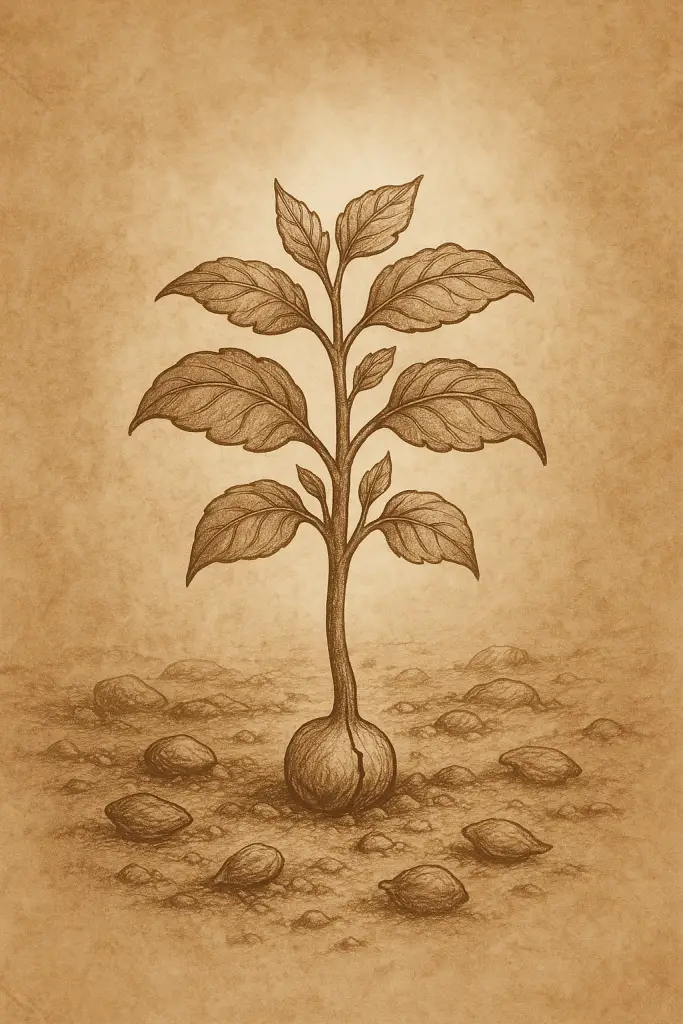
At the center of Christian Zionism lies a profound misunderstanding:
That the promises to Abraham belong to all of his natural descendants—regardless of their relationship to Christ.
But Paul, writing under divine inspiration, explicitly contradicts that assumption. He narrows the promise — not widens it:
“He saith not, And to seeds, as of many; but as of one…”
“…and to thy seed, which is Christ.”
This single verse dismantles the entire notion of dual heirship — the idea that there is a natural Israel inheriting physical blessings, and a spiritual Church inheriting heavenly ones.
Scripture says the Seed is Christ alone — and only those in Him are counted for the promise.
One Seed, One Heir
God made promises to Abraham — but those promises were not left open-ended. They were always aiming toward a single fulfillment.
“In thy seed shall all nations of the earth be blessed.”
— Genesis 22:18
Who is that seed?
“Which is Christ.” — Galatians 3:16
Not Isaac. Not Jacob. Not the twelve tribes.
Not a nation in unbelief. Not a people after the flesh.
Christ is the Seed.
He is the fulfillment of the promise, and the channel through whom all nations are blessed.
Not Seeds, as of Many
Paul’s argument in Galatians is meticulous. He uses singular and plural grammar to reveal a theological truth:
“Not… seeds, as of many.”
This shuts the door on the idea that all physical descendants of Abraham are automatically covenant heirs.
It also means there are not two heirs — one earthly, one spiritual.
There is one.
And if there is one Seed, there is only one body of people who inherit:
“And if ye be Christ’s, then are ye Abraham’s seed, and heirs according to the promise.”
— Galatians 3:29
But What About Israel?
The nation of Israel served as the natural vessel through whom the Messiah came. They were stewards of the covenants, the Scriptures, and the lineage of Christ (Rom. 9:4–5). But stewardship is not ownership.
The inheritance was always meant to pass into the hands of the Promised One.
And tragically, many in Israel rejected Him.
“He came unto his own, and his own received him not.”
— John 1:11
Those who reject the Seed have no part in the promise — regardless of heritage.
No Promise Outside of Christ
Every blessing, every inheritance, every piece of the Abrahamic covenant — land, seed, nation, blessing — finds its yes and amen in Christ (2 Cor. 1:20).
- The land is now the rest we have in Christ (Heb. 4:9).
- The seed is Christ, and those in Him (Gal. 3:16, 29).
- The nation is now a holy nation, a royal priesthood (1 Pet. 2:9).
- The blessing is the gift of the Spirit by faith (Gal. 3:14).
Outside of Christ, there is no remaining inheritance.
Christian Zionism Divides What God Has United
By separating the promise from the Promised One, Christian Zionism teaches:
- One seed by faith (the Church)
- Another seed by flesh (ethnic Israel)
- Two inheritances, two peoples, two plans
But God says there is one seed — and it is Christ.
To maintain the Christian Zionist system, this verse must be ignored, twisted, or minimized.
Yet it remains clear and final:
“To thy seed… which is Christ.”
The Glorious Inclusion
Here is the good news:
Those who were once far off — Gentiles, strangers, foreigners — are now grafted in through faith (Rom. 11:17). They become:
- Children of Abraham (Gal. 3:7)
- Joint heirs with Christ (Rom. 8:17)
- Partakers of the covenants of promise (Eph. 2:12–13)
The gospel brings inclusion, not exclusion. But it is inclusion in Christ, not apart from Him.
“And if ye be Christ’s, then are ye Abraham’s seed, and heirs according to the promise.”
— Galatians 3:29
One Seed.
One Promise.
One People.
One Lord.