Hebrew Roots and the Return to Bondage Series
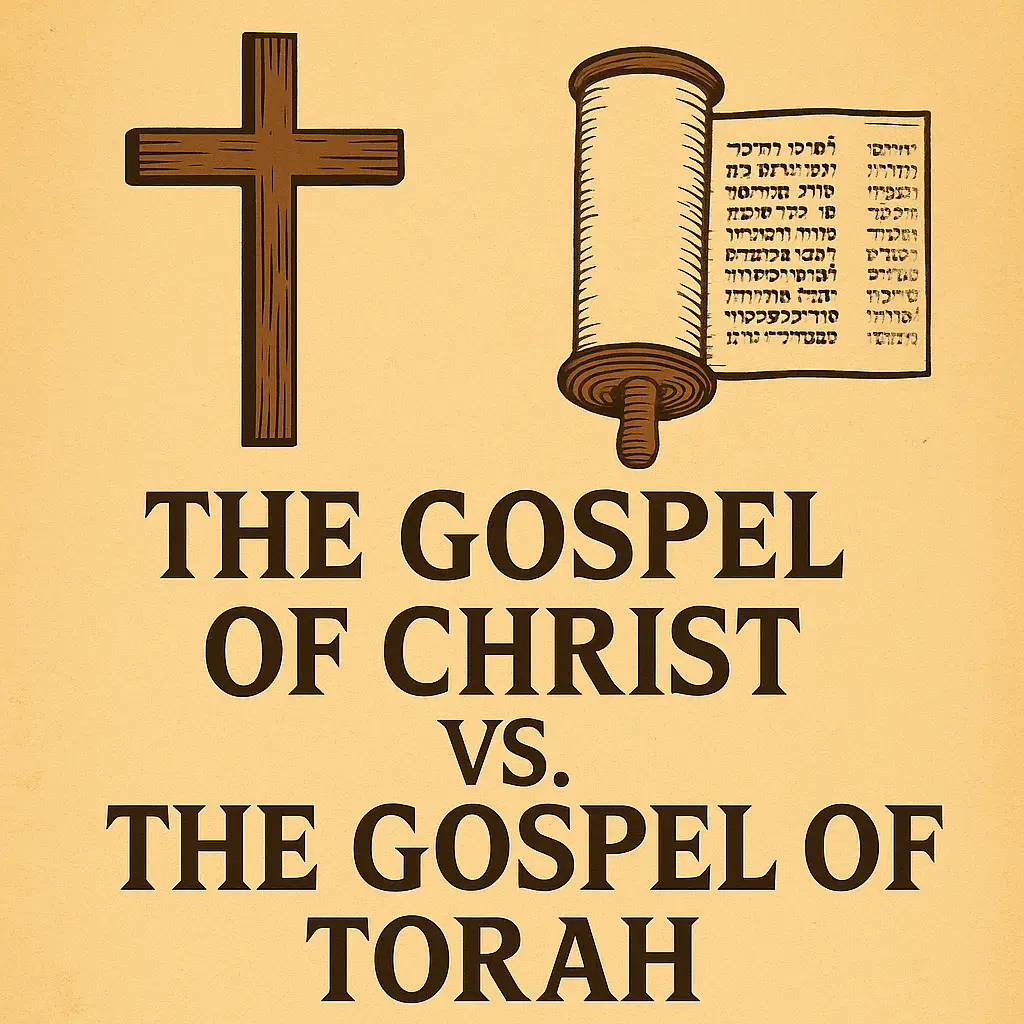
The distinction between the Gospel of Christ and the so-called ‘Gospel of Torah’ is not a matter of nuance — it is the heart of the New Testament. In the book of Galatians, Paul issues one of the strongest rebukes in all of Scripture, not against immorality, but against those who attempted to return to the law after receiving Christ. This is not a secondary issue. It is a matter of salvation, sanctification, and the sufficiency of Christ.
Paul’s Rebuke to the Galatians
Paul’s words to the Galatians are thunderous in tone. “I marvel that ye are so soon removed from him that called you into the grace of Christ unto another gospel,” (Galatians 1:6). The Judaizers had infiltrated the churches of Galatia and convinced many that faith in Christ was not enough — that they must also keep the law of Moses. Paul’s response? “O foolish Galatians, who hath bewitched you?” (Galatians 3:1).
To add the law to Christ is to nullify grace. “Christ is become of no effect unto you, whosoever of you are justified by the law; ye are fallen from grace” (Galatians 5:4). The Gospel of Torah is not a complement to the Gospel of Christ. It is a contradiction of it.
Romans 7: Dead to the Law, Married to Christ
Romans 7 gives the clearest illustration of our relationship to the law under the New Covenant. Just as a woman is loosed from the law of her husband when he dies, so we are loosed from the law through the death of Christ. “Wherefore, my brethren, ye also are become dead to the law by the body of Christ; that ye should be married to another, even to him who is raised from the dead” (Romans 7:4).
To go back to the law is to commit spiritual adultery. Christ fulfilled the law — not so that we could remain under it, but so that we could live in Him.
The Impossibility of Mixing Law and Grace
Law and grace cannot coexist as governing principles. “And if by grace, then is it no more of works: otherwise grace is no more grace. But if it be of works, then is it no more grace: otherwise work is no more work” (Romans 11:6). The attempt to blend the two results in the loss of both.
Hebrew Roots teachers often suggest that Torah observance is a form of deeper obedience or a sign of spiritual maturity. But Paul disagrees: “This only would I learn of you, Received ye the Spirit by the works of the law, or by the hearing of faith? Are ye so foolish? having begun in the Spirit, are ye now made perfect by the flesh?” (Galatians 3:2–3).
Rest in Christ Alone
The Gospel is not Christ plus Torah. It is Christ, crucified and risen. He is the fulfillment of the law, the end of the law for righteousness to everyone that believeth (Romans 10:4). To add anything to Him is to subtract from His glory and to obscure the sufficiency of the cross.